Industrial real estate has the same problem — with higher stakes
A logistics park or free zone is often larger and more complex than a residential launch: dozens of land plots, ready-built warehouses, build-to-suit parcels, infrastructure zones, and utilities, spread across a site an investor may never walk before signing. Yet the sales material is usually the same static PDF map and a spreadsheet of plot sizes.
For an occupier deciding where to put a regional distribution centre — or an investor evaluating a parcel worth tens of millions — that's not enough to build confidence. The decision is bigger, the sales cycle is longer, and the buyer is a company, not a couple.
What tenants and investors actually need to see
Industrial buyers ask different questions than home buyers:
- Where does this plot sit relative to the airport, port, highway, and customs gate?
- What's available right now — and what's already committed?
- Is it raw land, a ready-built warehouse, or build-to-suit?
- What are the dimensions, and does the parcel fit my required space?
An interactive zone plan answers all of that visually, before a single call.
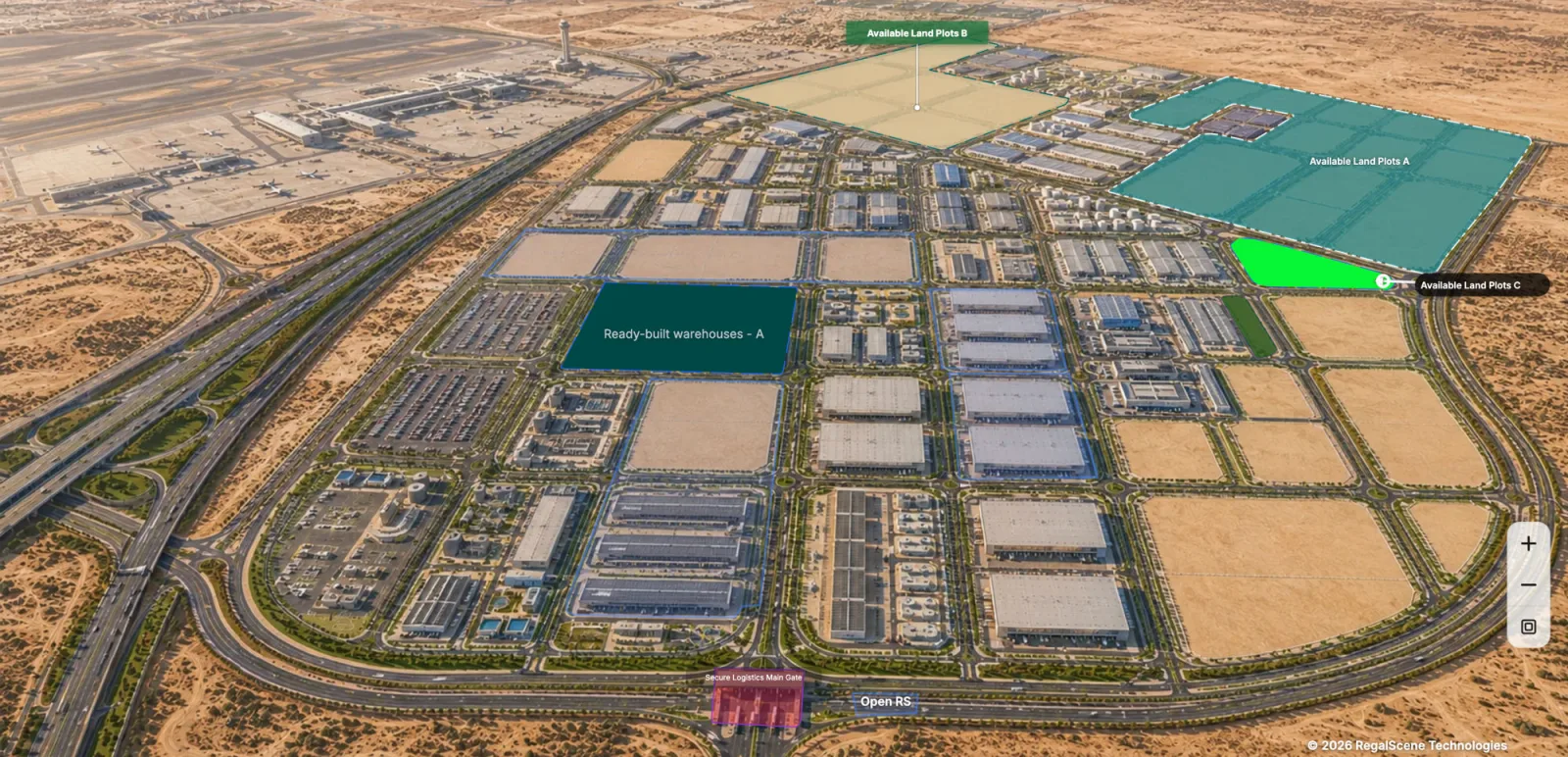
An interactive zone plan, not a static map
The same platform that powers residential master plans works for an industrial zone — the assets are just plots and warehouses instead of towers and units.
Available plots and ready-built warehouses, on one plan
Every land plot and warehouse becomes a clickable, status-aware hotspot on the zone plan. Investors and tenants explore the whole estate, zoom into a specific parcel, and see how it connects to roads, gates, and infrastructure.
Leasing status that reflects reality
Industrial deals aren't a simple "available or sold." An interactive zone plan can show the real commercial pipeline — available for lease, anchor tenant, under negotiation, or temporarily held — so serious enquiries focus on what's genuinely open.
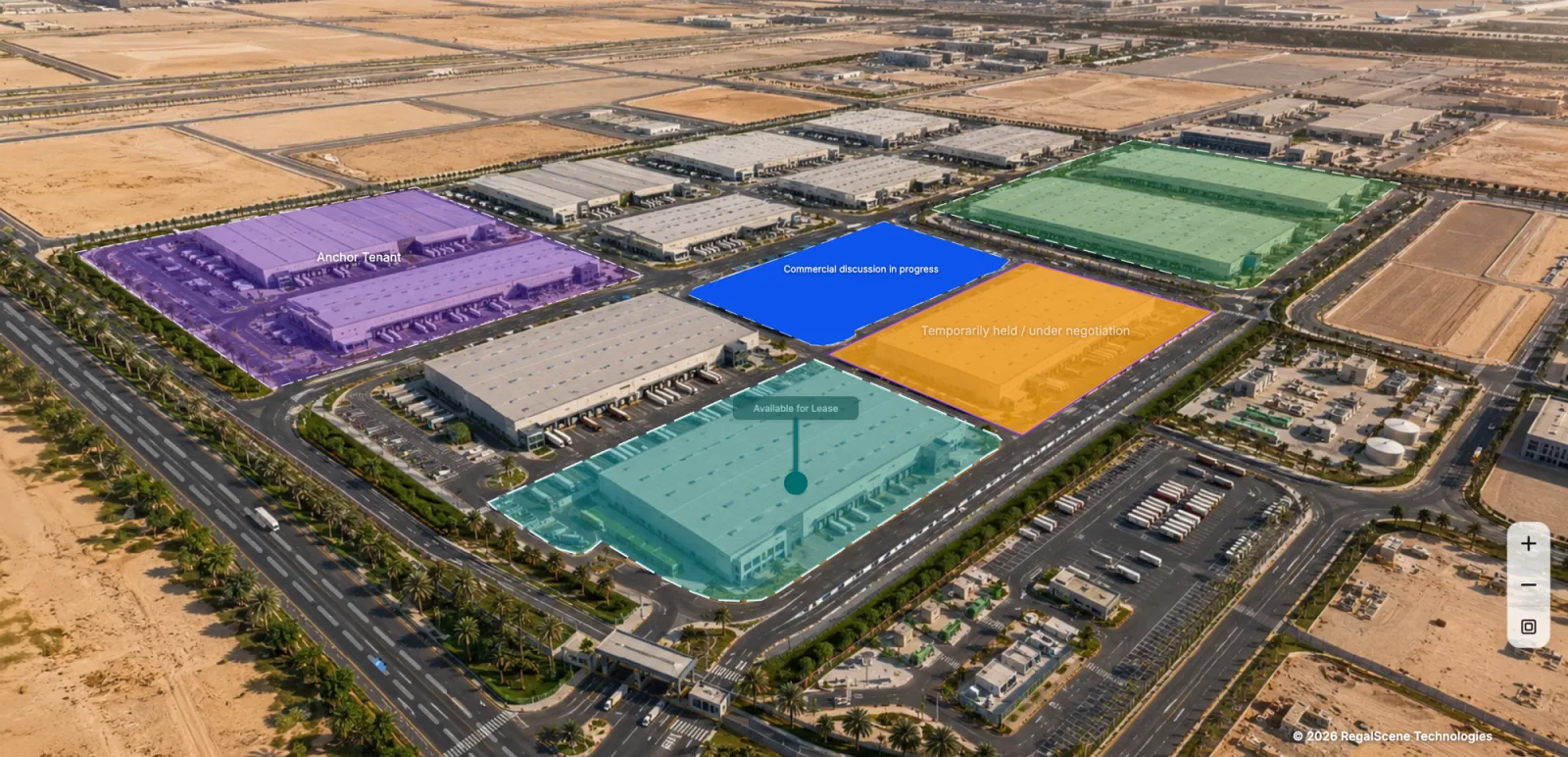
Asset detail built for leasing
Tapping a warehouse or plot opens the detail a commercial decision actually needs: leasing status, and actions built for B2B — request a callback, message on WhatsApp, download a spec sheet, schedule a site visit, or reserve.
B2B enquiry, captured in context
Residential lead forms ask for a name and phone number. Industrial leasing needs more, and an interactive experience can capture it in context — the specific plot or warehouse, plus company name, required space, and intended use.
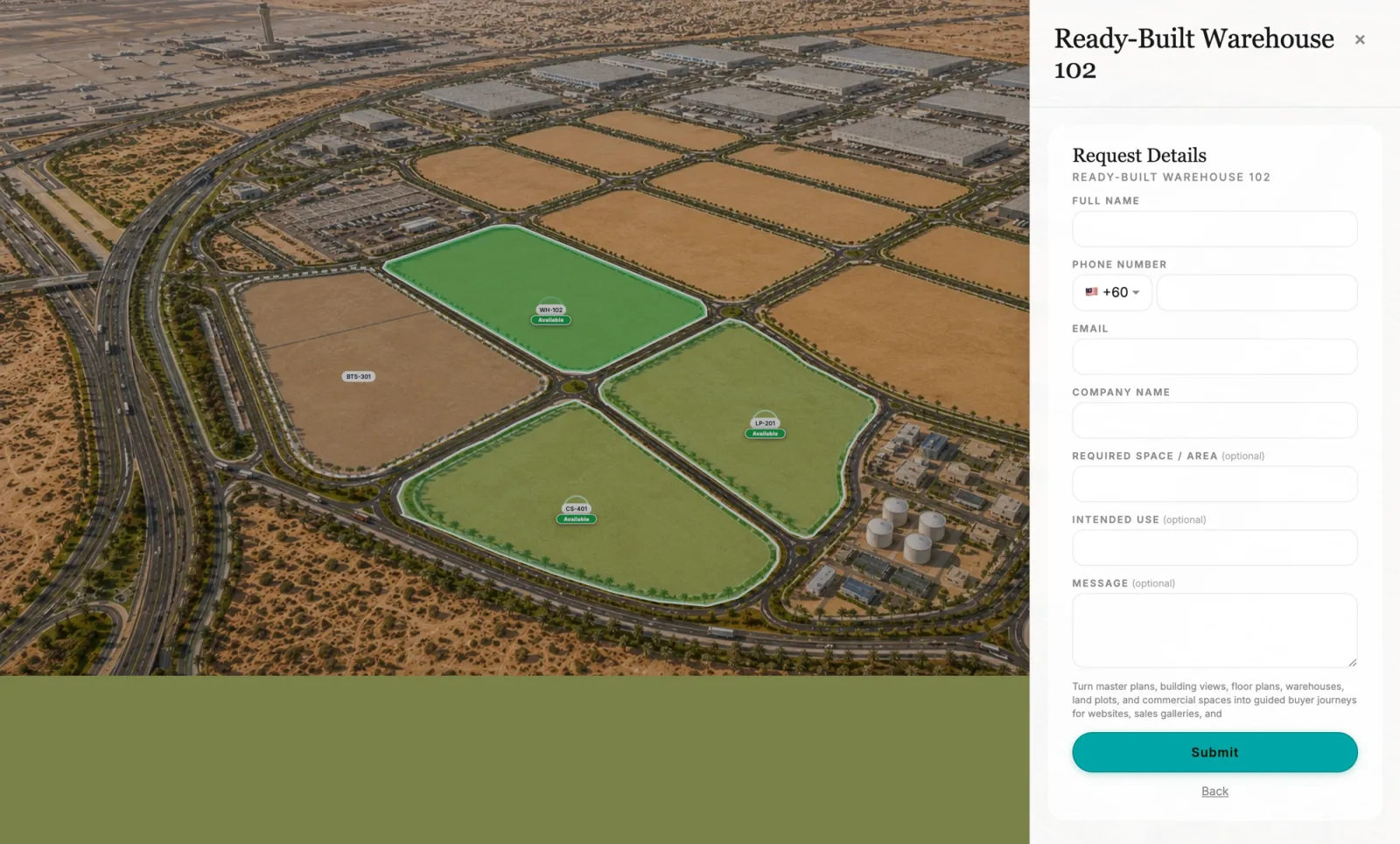
The leasing team opens each enquiry already knowing which asset the tenant explored, how much space they need, and what they intend to do with it — instead of starting cold.
Who it's for
- Free zone operators presenting land plots and infrastructure to international investors
- Logistics and industrial park developers leasing ready-built and build-to-suit warehouses
- Economic cities and special economic zones guiding occupiers across a large estate
- Industrial asset owners and REITs marketing available space to tenants
The same platform, a different asset
None of this is a separate product. RegalScene isn't built only for homes — it turns any development you can put on a map into an interactive, explorable experience with enquiries captured in context. A residential tower and a logistics free zone run on the same platform; only the assets and the enquiry flow differ.
Related reading:
- Commercial Property Leasing Goes Interactive: Offices, Retail, and Industrial
- What RegalScene Can Do for Master Plans, Free Zones, and Large-Scale Developments
- From Master Plan to Digital Sales Center: How GCC Mega Projects Can Sell Faster Online
- Why Real Estate Developers Need a Visual Inventory Layer, Not Just a CMS
Scene Engine turns logistics parks, free zones, and industrial estates into interactive leasing experiences with plot-level availability and B2B enquiry capture. Learn more or book a demo.