Search for "virtual tour software" and you'll find dozens of tools — most built for photographers, hotels, or resale agents, not for developers selling hundreds of off-plan units. Picking software built for the wrong job is the most common reason a developer's "virtual tour" ends up as a nice demo that generates no leads.
Here are the four categories that actually exist, what each is good at, and how to evaluate them for a project launch.
The four categories of virtual tour software
1. 360 capture and hosting tools
Tools like Matterport or Kuula are built around capturing real spaces with a 360 camera and hosting the result. They're excellent for completed show units, resale, and rental — fast to produce, affordable, widely understood.
Where they fall short for developers: they show one space at a time. There's no project navigation, no unit availability, no connection between the tour and your inventory. For off-plan projects with nothing built yet, there's also nothing to capture.
2. Render-based panorama viewers
Visualization studios deliver rendered 360 panoramas in a simple viewer — often bundled with your CGI package. Good for off-plan immersion at the unit-type level.
Where they fall short: same as capture tools — immersion without navigation or data. The viewer typically can't answer "is this unit available?" or capture a lead with context.
3. Custom game-engine experiences
Bespoke walkthroughs built in Unreal Engine or Unity, usually for flagship and mega-projects. Cinematic, free-roam, genuinely impressive on a sales gallery screen.
Where they fall short: cost (often six figures), production time (months), and change cost — reflecting a new phase or updated availability can mean a rebuild. They also tend to live on gallery hardware rather than the buyer's phone.
4. Interactive sales platforms (project-level)
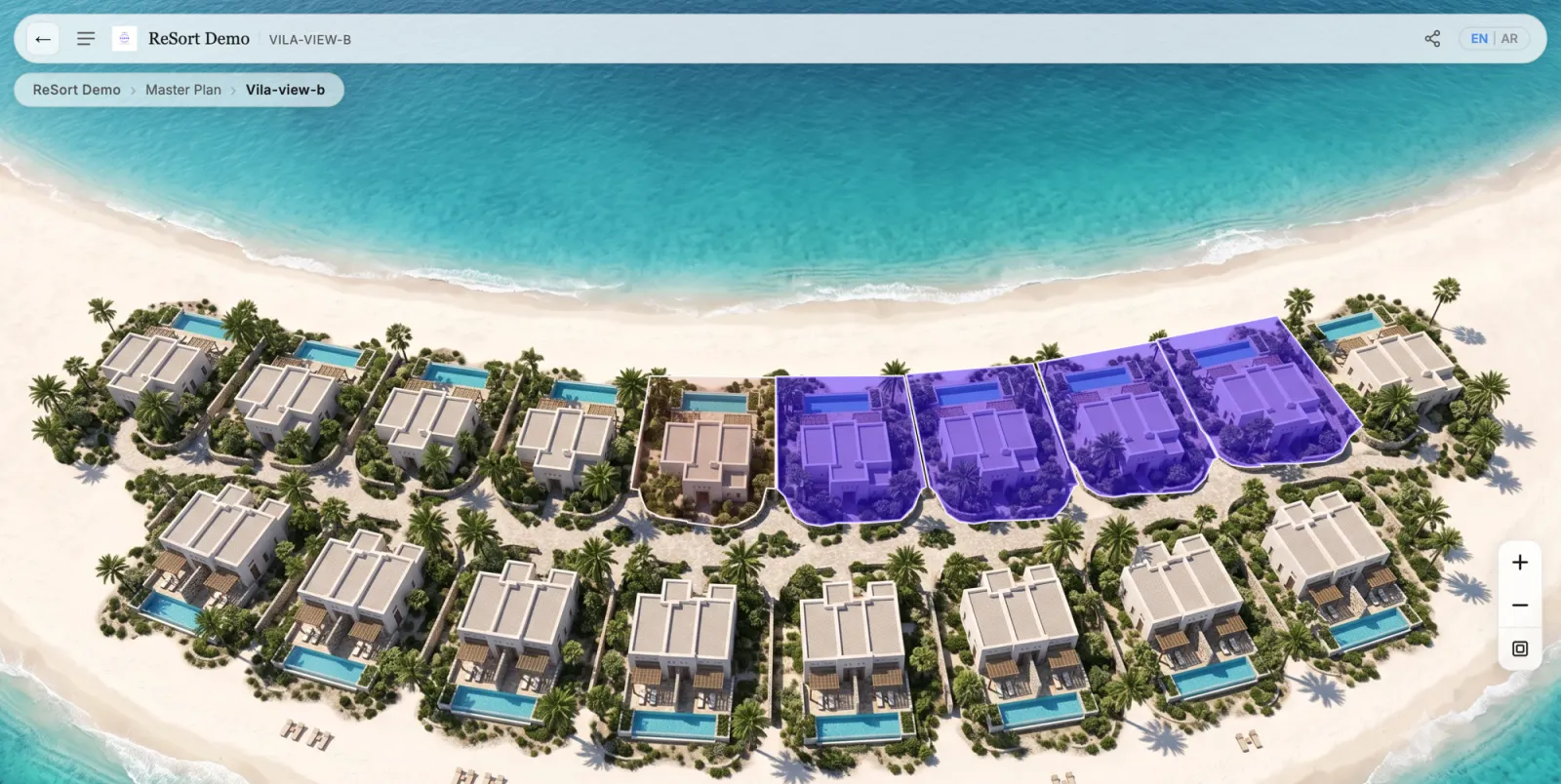
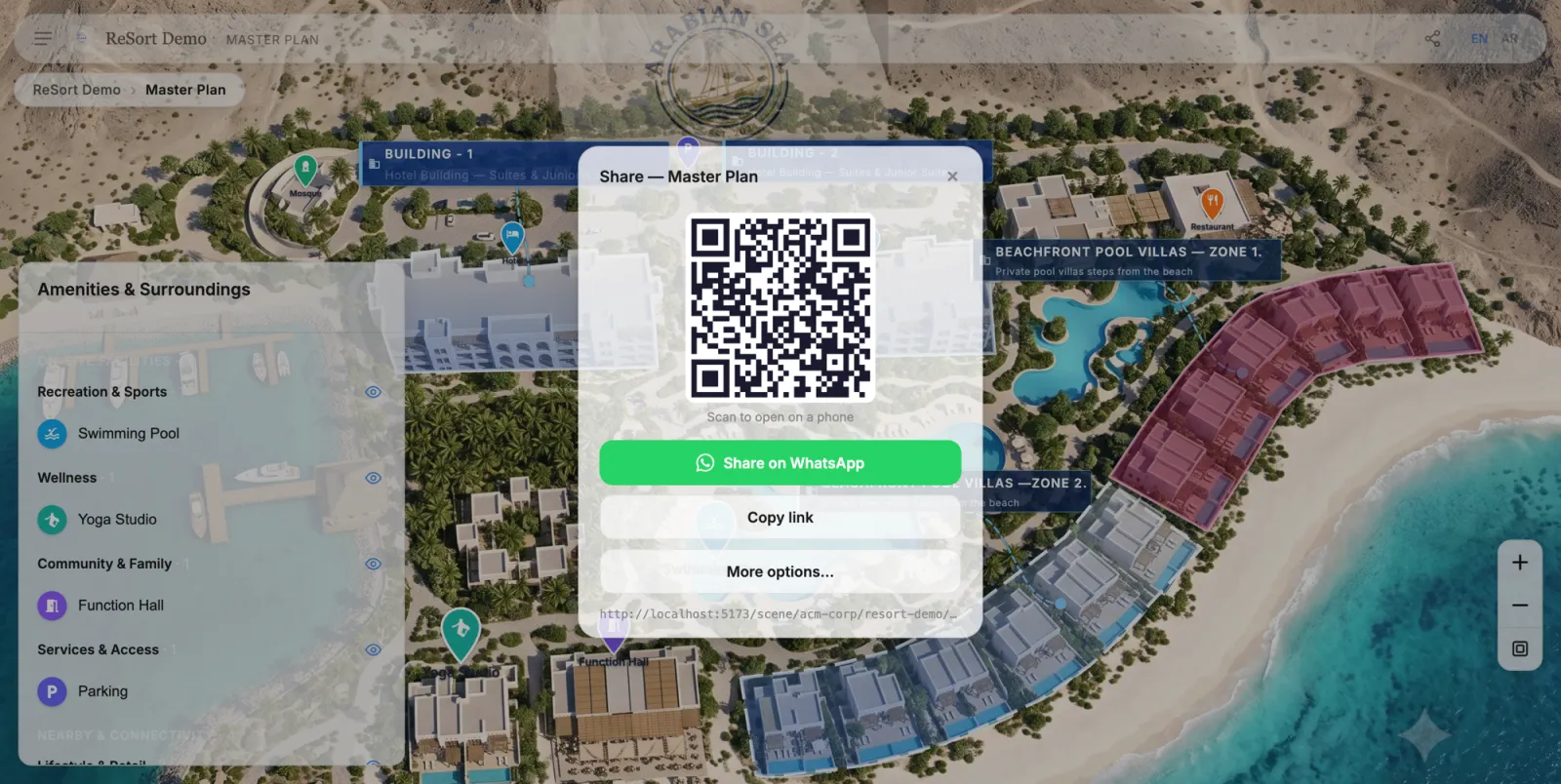
Platforms built for the developer's actual problem: turning the whole project — master plan, buildings, floors, units — into a navigable experience with current availability and contextual lead capture, published to your website and campaign pages. RegalScene is in this category, alongside regional players in most markets.
Where they fall short: if all you need is a single show unit walkthrough, a project-level platform is more than the job requires — use a capture tool.
The evaluation checklist
Whatever you shortlist, test it against these ten questions:
- Does it cover the full project or just one space? A township needs zones → buildings → floors → units, not a single panorama.
- Does it work for off-plan? Can it build from the renders and site plans you already have, before anything is constructed?
- Is unit availability live? Sold units should show as sold without a support ticket.
- Does enquiry capture include context? A lead that says "interested in Tower B, floor 12, type C, saw the price" is worth multiples of a bare contact form.
- Does it run in a mobile browser? Buyers in Southeast Asia and the GCC shop on phones, inside WhatsApp and WeChat webviews. App downloads kill conversion.
- Can it embed into your existing website? You shouldn't have to rebuild your web presence around the tool.
- Can agencies and campaigns get their own controlled versions? Multi-agency distribution without losing control of pricing and leads.
- What does an update cost? New phase, price change, sold-out zone — minutes in an admin console, or a change order?
- Does it survive handover? The best platforms keep working for resale and leasing after sell-out instead of retiring with the campaign.
- Who owns the leads and the data? They should land in your systems, unconditionally.
The honest recommendation
Most developers need two tools, not one: a capture tool for completed physical spaces, and a project-level interactive platform as the front door that ties everything — renders, tours, floor plans, availability — into one buyer journey. The mistake to avoid is buying immersion (category 1–3) and expecting it to do navigation and lead generation (category 4). They're different jobs.
Related reading:
- Virtual Tour vs 3D Render vs Interactive Master Plan: Which Sells Property Better?
- Interactive Floor Plan Software: What Real Estate Developers Should Look For
- How Much Does a Virtual Sales Gallery Cost?
RegalScene is the project-level layer: interactive master plans, building and floor navigation, current inventory, and contextual leads — built from the assets you already have. Book a demo.