A township is where conventional property marketing quietly falls apart. One project, several products — villas, apartments, retail, sometimes offices — each with its own buyers, pricing logic, and sales pace. Districts release in phases across years. The brochure becomes a library of brochures; the price list becomes a spreadsheet nobody trusts; and the one question every buyer asks first — where is this, inside all of that? — has no good static answer.
This is the project type interactive master plans were made for. Here's the anatomy, using a real township experience.
One front door for every buyer type
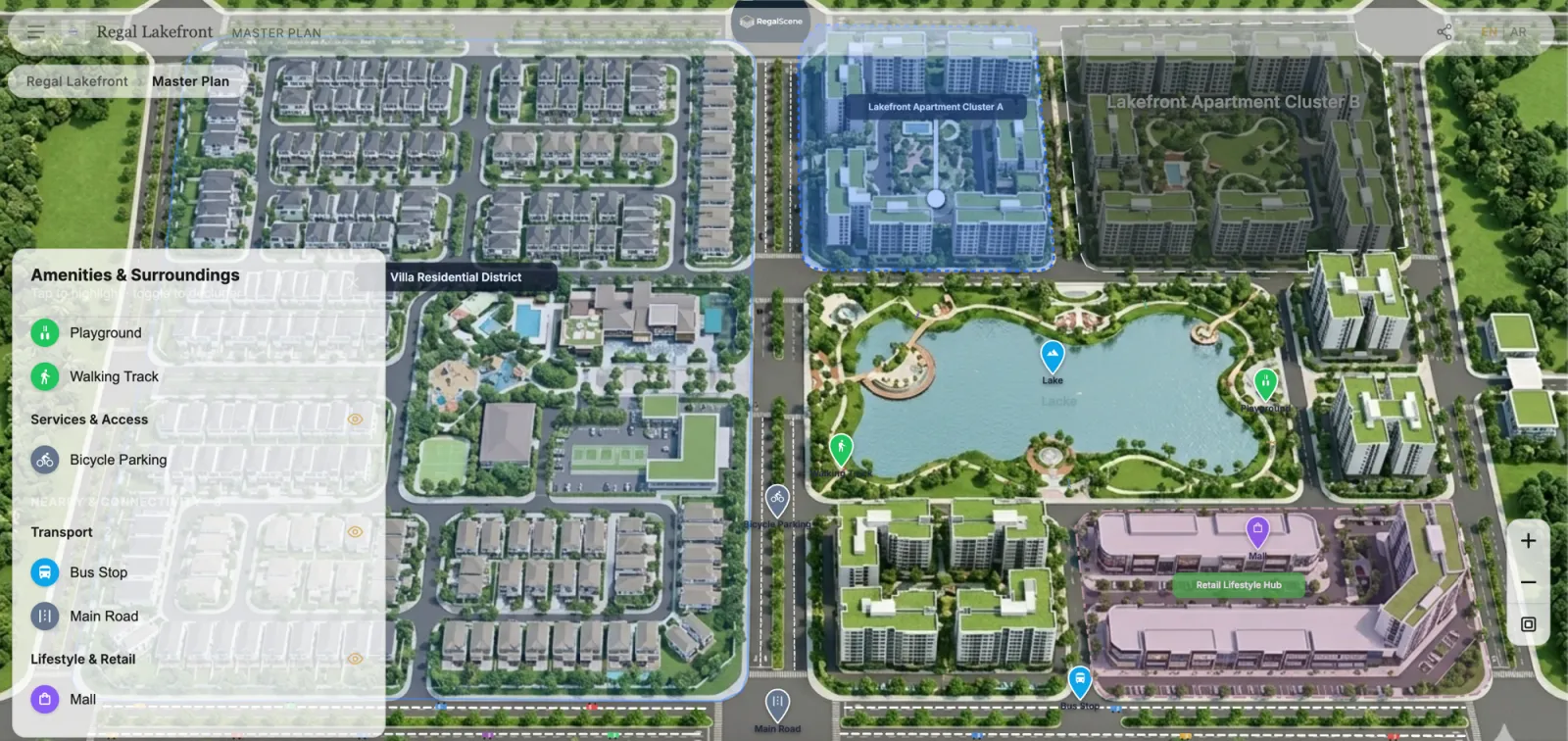
The township master plan is the shared entry: districts outlined and clickable, the lake and amenities as landmarks, apartment clusters on one side, the villa district on another, retail where the buyers' daily life would happen. Amenity categories toggle on and off, so a family checks the playground and school run while an investor reads the retail frontage.
 Live demoExplore a live interactive master planopens the interactive RegalScene demo in a new tab
The subtle work this level does: it sells the township, not a unit. Big developments live or die on the masterplan story — connectivity, amenity, scale — and this is where that story becomes explorable instead of asserted.
Districts: where the hierarchy earns its keep
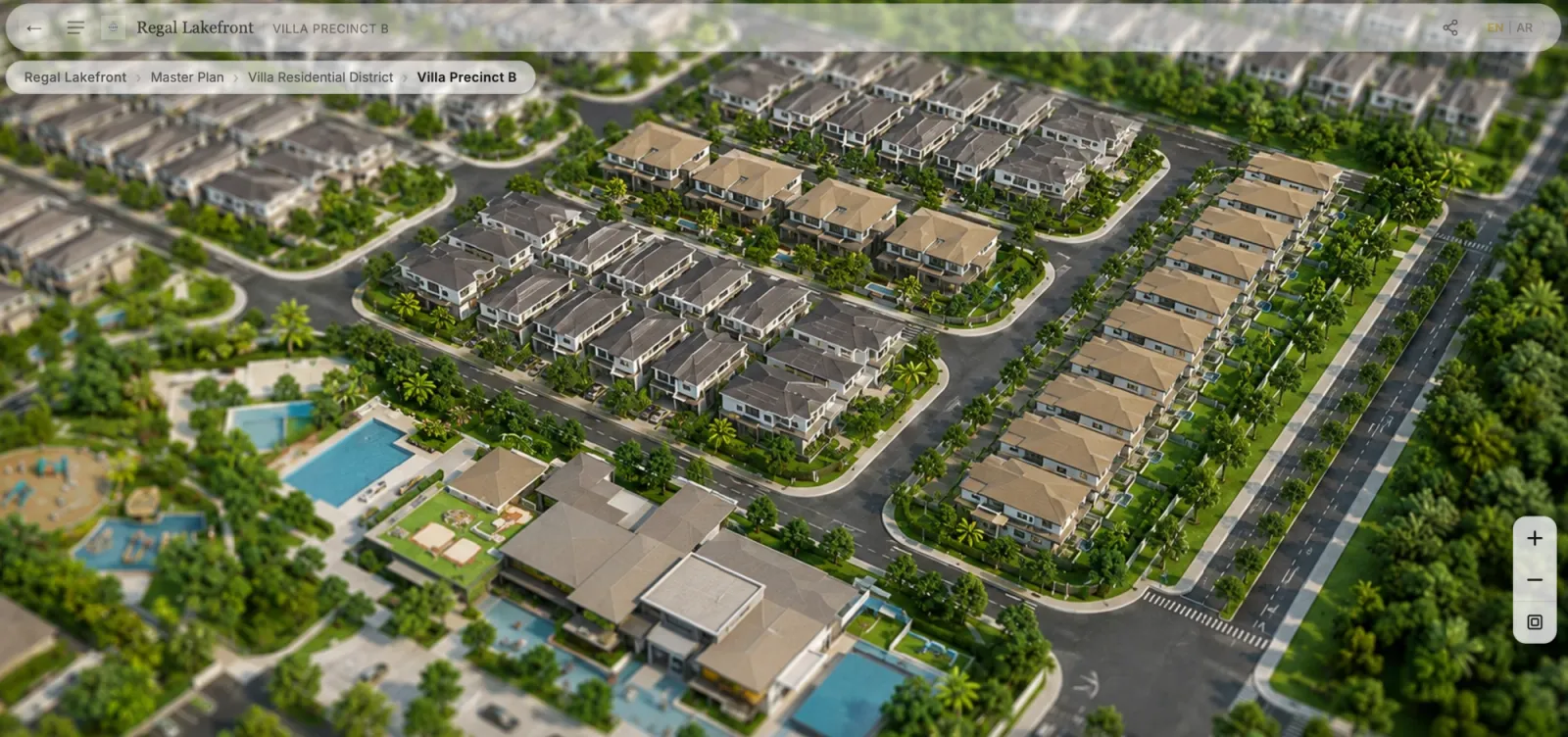
Click the villa district and the experience narrows: precincts outline within the district, each a cluster with its own character and phase. A buyer who knows they want a villa never sees tower floor plans; a precinct nearly sold out shows it honestly.
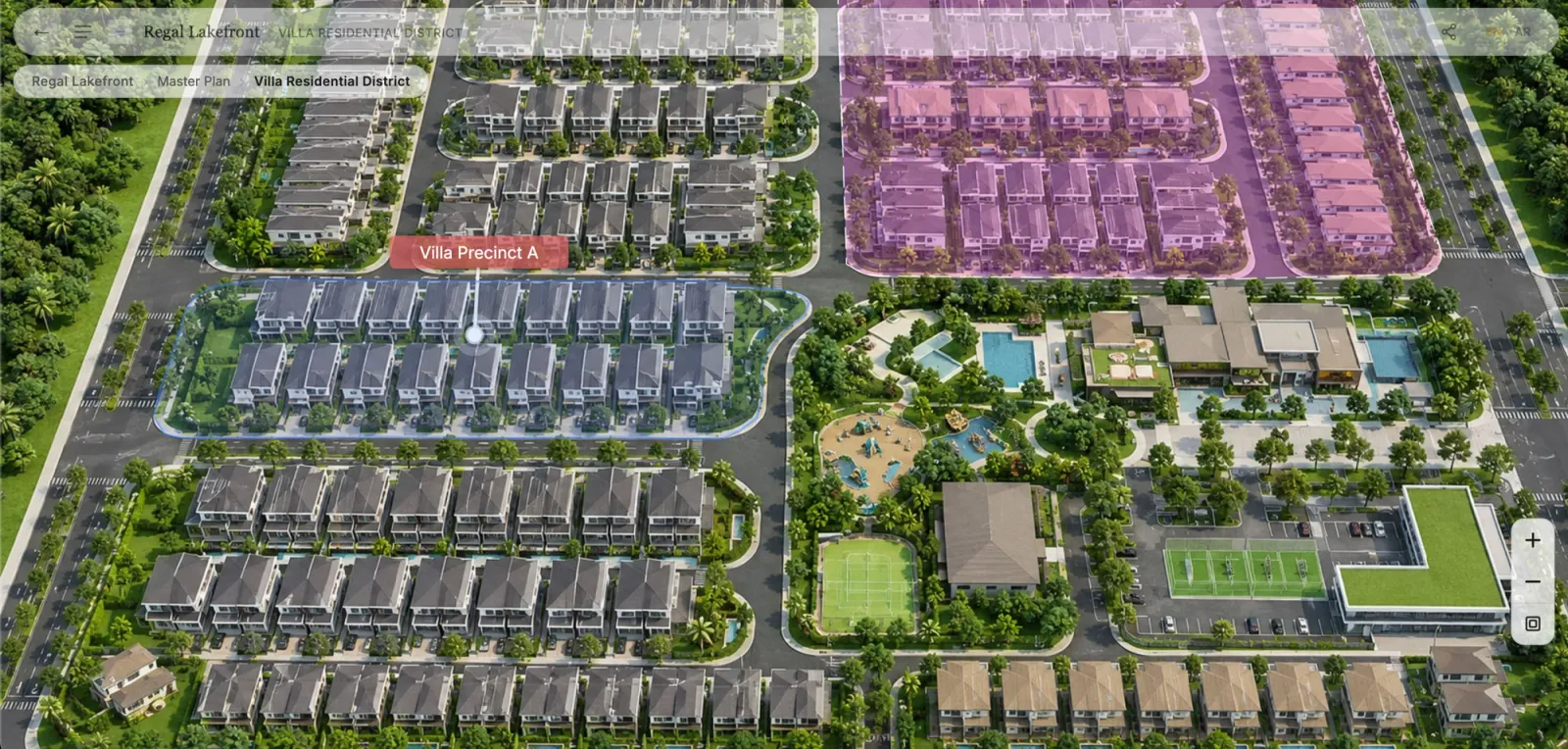
This middle layer is what flat "clickable master plan" tools skip — and it's precisely where township buyers make their real choice. Nobody buys "the township"; they buy a precinct's street, density, and neighbors.
Down to the single villa
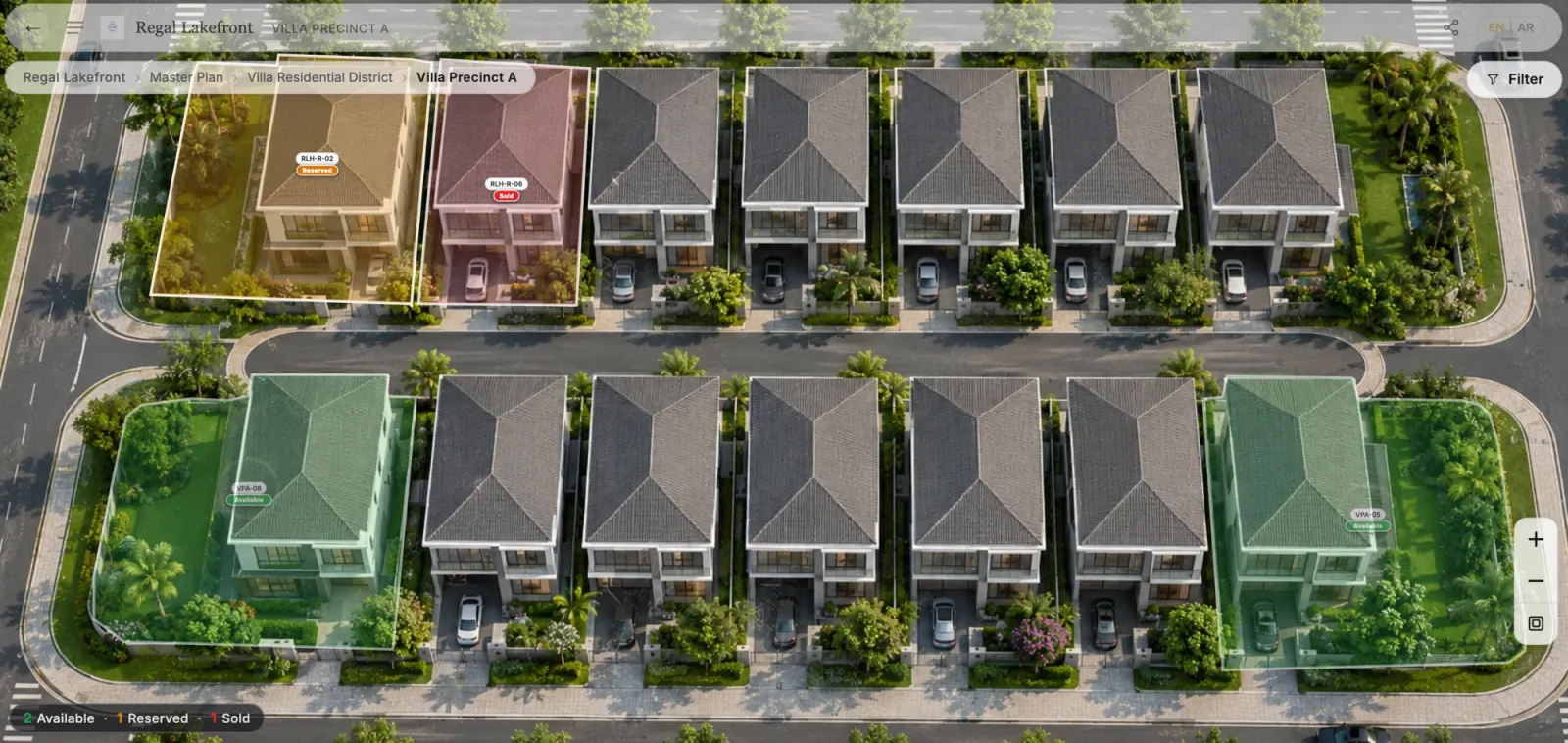
At precinct level, every villa carries its status — available, reserved, sold — on the actual home, and the filter works here too: availability, type, price. From a township of thousands of units, a buyer reaches their shortlist of two villas in under a minute, and enquires from the one they want.
 Live demoTry current availability in the demoopens the interactive RegalScene demo in a new tab
What townships specifically need from the platform
Beyond the standard checklist, township scale adds four requirements:
Deep hierarchy without dead ends. Master plan → district → precinct → unit (and, for the apartment districts, → tower → floor → unit). Every level needs a way in, a way back, and a shareable link — buyers arrive from campaigns at every depth.
Mixed product types in one inventory. Villas have plot sizes; apartments have floors; retail has frontage and lease terms. The inventory model must handle different attributes per product without forcing everything into an apartment template.
Phase-aware publishing. District two releases next year. The experience should carry it dark until launch day, then publish it into the same link every buyer and agent already has — no new microsite, no re-education.
Aggregate honesty. At district level, buyers should see availability summaries ("32 of 60 villas available") that roll up truthfully from unit status — the trust signal off-plan buyers read closely.
The economics at township scale
Township marketing budgets are large enough that the interactive layer is a rounding error against the render and media spend — but the return scales differently than for a tower. A tower's experience mostly serves one launch window; a township's serves every launch for a decade, compounds its exploration analytics across phases (which precincts get attention informs the next district's product mix), and gives the sales team one URL that stays true from first villa to final retail lot.
The hierarchy described above is not a bespoke build per township. It is how the software is structured: districts, precincts, buildings, floors, and units as connected views, with each phase published into the same experience.
Related reading:
- Interactive masterplan software for property developers
- Interactive Master Plan Example: Anatomy of a Real Project, Screen by Screen
- Interactive Master Plan Benefits: What Property Developers Actually Gain
- Interactive Master Plans for Township Sales in Johor
- Interactive Master Plans for Selangor Townships
- Commercial Property Leasing Goes Interactive: Offices, Retail, and Industrial
- Selling Off-Plan Property Digitally: Reducing Buyer Uncertainty
- How Massive Master Plans Stay Fast in a Normal Browser
- Why RegalScene Isn't Priced Per Unit
RegalScene handles township hierarchies natively — districts, precincts, towers, and mixed inventory in one navigable experience with current availability. See the platform or book a demo.