Commercial leasing teams have watched residential marketing get interactive while their own collateral stayed frozen: the industrial park PDF, the mall leasing plan in an email attachment, the office stacking plan that's three tenants out of date. The irony is that commercial assets fit interactive maps better than apartments do — the questions are more spatial, the deals more considered, and the audience more patient with detail.
The commercial questions are map questions
An occupier evaluating an industrial park asks: which plots are actually available, how big, how far from the gate, what's adjacent? A retailer asks about frontage, anchor proximity, and footfall paths. An office tenant asks which floors are contiguous. Every one of these is answered by position — and answered instantly on an interactive plan:
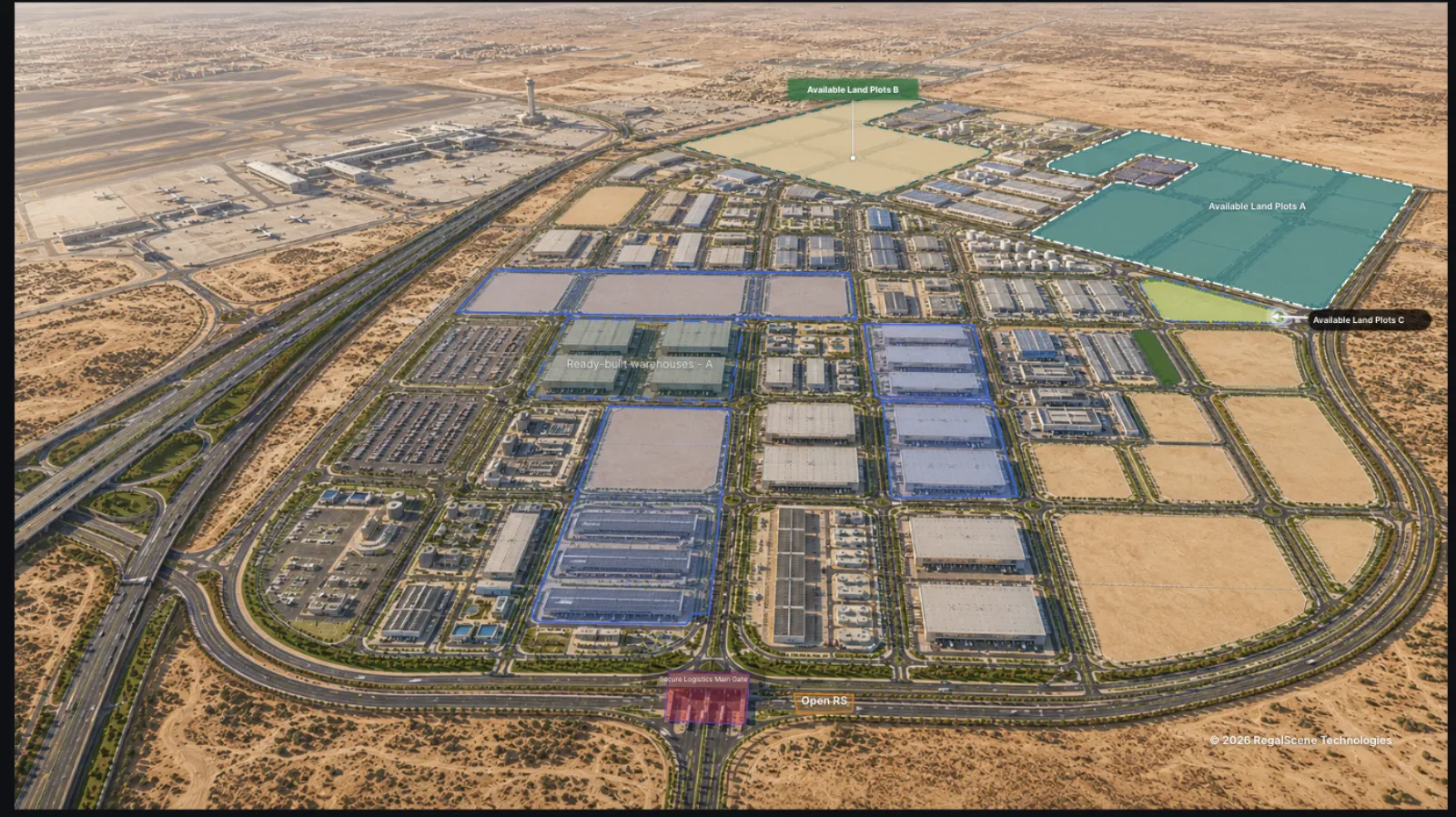
The park above shows the pattern: land parcels colored by availability, ready-built warehouses as distinct assets, the security gate and access marked. A logistics occupier can shortlist parcels against the airport road in the first minute — no call, no PDF, no site visit for the long-list stage.
What changes from residential
The journey mechanics carry over from residential experiences — navigate, filter, verify, enquire — but four things must change under the hood:
Asset types, not unit types. A warehouse is clear height, dock doors, power capacity, and yard depth. A retail lot is frontage, floor area, and grease-trap provisions. Land is zoning, serviced status, and hectares. The inventory model needs configurable attributes per asset type — the fastest test of whether a "commercial-capable" platform actually is.
Leasing states, not sales states. Available / under negotiation / leased (with expiries for renewals) tells a different story than available/sold — and under negotiation is a state commercial landlords actively use to create urgency without lying.
B2B enquiry capture. The lead form needs company, required size, intended use, and timeline — and the enquiry should arrive tied to the specific parcel or unit, because "interested in Plot C-4, 2 hectares, cold-chain use" starts a completely different first call than a generic inquiry.
Two audiences again. Like hotels, commercial assets sell to occupiers and investors. The same map that lets a tenant shortlist warehouses shows an investor the park's occupancy story at a glance.
Where it applies
- Industrial parks and free zones — plots, ready-built units, phased infrastructure; the deep dive is in our free-zone leasing guide
- Retail and malls — leasing plans with live lot status, anchor positions, and footfall context
- Office buildings — stacking plans as interactive floors, contiguity visible
- Land estates — zoned parcels with size, service status, and build-to-suit enquiry
The quiet advantage: commercial moves slower
Residential launches spike and fade; commercial leasing is a standing pipeline. That changes the ROI shape: an interactive leasing map isn't a campaign asset but infrastructure — the always-current answer to "what do you have?" that works for every broker conversation, every inbound enquiry, and every renewal cycle for years. The same update economics that favor platforms over custom builds apply doubly when the asset's life is measured in decades.
Related reading:
- Interactive Land & Warehouse Leasing for Logistics and Free Zones
- Interactive Master Plans for Townships and Mixed-Use Developments
- From Digital Twin to Sales Twin: Live Property Data After Handover
- RegalScene Beyond Residential: One Platform for Any Mapped Asset
- Interactive Floor Plans for Coworking and Flexible Workspace
RegalScene's template-driven inventory describes warehouses as warehouses and retail as retail — with leasing states, B2B enquiry forms, and live maps for parks, malls, offices, and land. See the platform or book a demo.