Singapore's property market runs on agency networks. When a developer launches a new project — whether it's a condominium in the Core Central Region, an executive condo in the suburbs, or a mixed-use development in a growth corridor — the sales operation typically involves multiple agencies working in parallel.
The co-broking model means that agents from ERA, PropNex, OrangeTee & Tie, Huttons, and numerous boutique firms all have the opportunity to bring buyers. On a busy new launch weekend, dozens of agents from different agencies may be presenting the same project to their respective clients simultaneously.
This model delivers reach. It also creates coordination challenges that most developers manage through manual processes.
How property sales work through agency networks in Singapore
A typical new launch involves the developer appointing a marketing agency or internal sales team to manage the overall launch strategy, then opening the project to co-broking agents across multiple firms.
Each participating agent receives:
- A project brief or fact sheet
- Floor plans and site plans
- A pricing guide or price list (sometimes released in phases)
- Showflat access or virtual tour links
- Booking procedures and forms
Agents use these materials to market the project to their own buyer networks — through property portals, social media, WhatsApp groups, personal networks, and client databases.
The developer's interest is clear: reach as many qualified buyers as possible through as many agents as possible. The challenge is keeping the process controlled.
The coordination challenge with multiple co-broking partners
Real-time availability during launch weekends
On launch day, units move quickly. A unit might be available at 10am and reserved by 10:30am. If an agent is showing an outdated availability list to a buyer at 10:45am, the buyer may express interest in a unit that's already gone.
Most developers manage this through WhatsApp broadcast groups or a shared Google Sheet. But when thirty agents across five agencies are all checking the same sheet and the status is changing every few minutes, the experience is chaotic.
Price list management
Price lists for Singapore launches are often released in tranches. Early-bird pricing, VIP pricing, and subsequent phase pricing may differ. Agents need the correct price list for the correct phase, and they need to know when prices change.
When price lists are distributed as PDF files, version control becomes a problem. An agent might inadvertently show a buyer the previous tranche's pricing, creating confusion at the point of booking.
Lead attribution and commission tracking
In the co-broking model, commission depends on which agent brought the buyer. When a buyer interacts with multiple agents — perhaps viewing the showflat with one agent but eventually booking through another — disputes can arise.
A central system that tracks which buyer enquired through which agent, and when, helps reduce these conflicts. But most developers don't have this level of lead attribution across their agency network.
Overseas marketing
Singapore developers increasingly market projects to overseas buyers — Malaysians, Indonesians, mainland Chinese, and Hong Kong buyers. This involves working with overseas agents who need the same project materials but may operate in different languages and communication channels.
Coordinating with overseas agents adds another layer of complexity to the distribution challenge.
Why developers need central inventory and lead control
The underlying issue is that each agent operates with a point-in-time snapshot of the project. They downloaded the materials on Monday, and by Friday, some of that information is outdated.
What developers need is a model where:
- Availability is live. Every agent sees the same, current unit status — not a screenshot from the last update.
- Materials are consistent. Every agent presents the same master plan, the same floor plans, and the same project imagery — not their own adapted version.
- Leads are tracked by source. When a buyer enquires, the system records which agent or agency generated the lead, with context about what the buyer was interested in.
- Price visibility is controlled. The developer decides when and how pricing is shown. Agents can't accidentally share the wrong price list.
Supporting agencies with better digital project access
This doesn't mean restricting agencies or making their job harder. The goal is to give them better tools so they can sell more effectively.
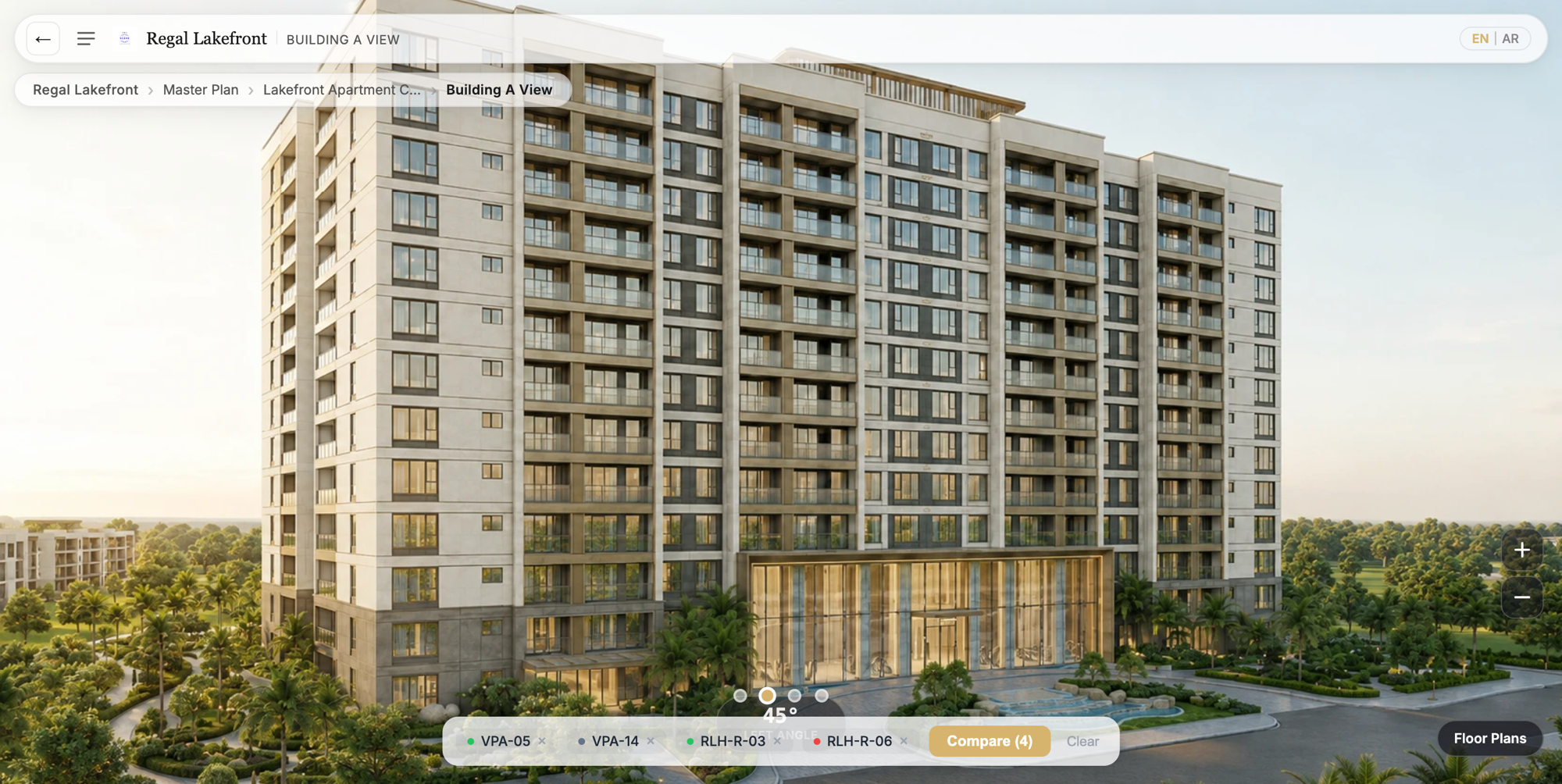
When an agent can share a link to an interactive master plan that shows live availability, they're giving their buyer a better experience than a PDF brochure. When an agent can check unit status in real time instead of messaging the developer's team, they can respond to buyer interest faster.
For agencies, the benefits are practical:
- No more version confusion. The project they're showing is always current.
- Professional presentation. The interactive experience looks the same whether the agent is a senior negotiator at a large firm or an independent agent.
- Own lead visibility. Agents can see and manage the leads they've generated, with clear context about what each buyer explored.
- Faster response. Instead of waiting for the developer to confirm availability, the agent checks the live inventory and responds to the buyer immediately.
A practical approach for Singapore project launches
For Singapore developers considering this model, the implementation is straightforward:
- Create the interactive project experience — master plan, building explorer, floor plans, unit inventory — in a central platform.
- Set up agency access — assign each participating agency access to the project with view-only permissions.
- Connect inventory — ensure unit availability is reflected in real time on the interactive experience.
- Enable lead capture — embed enquiry forms at the building and unit level, with automatic agency attribution.
- Launch — agents share the interactive experience with their buyers instead of (or alongside) traditional materials.
The existing co-broking model doesn't change. Agents still bring buyers, still earn commissions, and still manage their client relationships. The difference is that they're working from a live, controlled project source instead of static files.
Related reading:
- How Developers Can Sell Through Multiple Brokerages Without Losing Control
- How Malaysian Property Developers Can Manage Multi-Agency Sales Digitally
- Property Sales Channels for the Chinese Market
RegalScene helps property developers manage interactive project experiences, inventory, and leads across multiple agency partners. Learn more or get in touch to see how it can support your next Singapore project launch.