Ask a developer who brought a lead and you get a confident answer. Ask the agency and you get a different confident answer. Both are arguing from memory, a phone log and a sign-in sheet, and neither can prove anything.
This is not a reporting problem. It is a commercial one. An agency that cannot prove what it produced will eventually stop producing it for you, and a salesperson who watches a colleague get credited for their buyer learns something unhelpful about how your team works.
A referral link turns that argument into a field on the lead.
What a referral link is
Every salesperson and every agency agent can have their own link to a project.
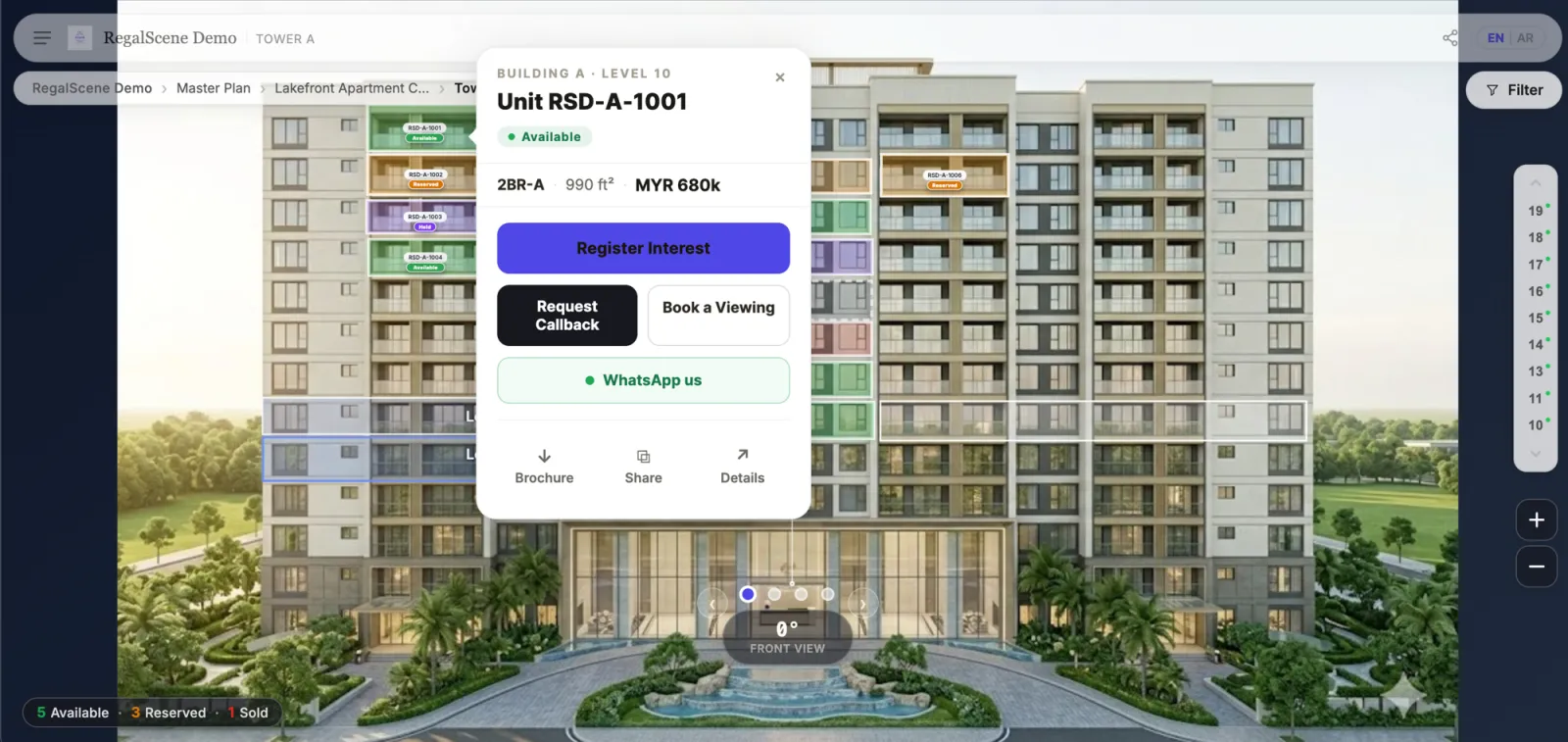
It points at the project exactly as any other link does, so a buyer opening it sees the development, not a tracking page. What differs is invisible to the buyer: the link carries an opaque code that records who sent them.
A visit through that link is recorded. If an enquiry follows, the credit is written onto the lead and stays there.
Links can be issued per project, so a salesperson working three launches has a link for each, and a link can carry a validity window if it belongs to a campaign or a secondment that ends.
The buyer sees the project. You see where they came from.
How credit is decided
This is where most attribution systems get vague, so it is worth being exact.
Credit follows the link the buyer arrived through, resolved by agreed precedence rather than by whoever happens to open the lead first. Once written, the credit is held on the lead itself, with the names recorded as they stood at the time. If an agent later leaves, or an agency agreement is renegotiated, the history of who brought what does not rewrite itself.
Two behaviours matter in practice:
A forwarded link does not transfer credit. A buyer sending a unit to their partner is sharing a unit, not reassigning a lead.
A link is not a lock. It records origin. What you do about origin, how you handle a buyer who came through one agency and bought through another, stays a commercial question with a commercial answer. The system gives you the fact, not the verdict.
What agencies and brokers actually get
Agencies usually describe the same three frustrations, and all of them are addressable.
They are selling from stale material. An agency works from whatever it was sent, and that file ages immediately. With a placement or a referral link, they are presenting the same current availability you are, so they stop telling buyers a unit is free that sold three weeks ago.
They cannot prove what they produced. They can now. Enquiries they brought are visibly theirs, recorded at the moment they arrived rather than reconstructed afterwards.
They have nothing good to put on their own site. An agency can embed the project on their website, restricted to the domains you approve, and sell from it the way you do.
What they do not get is visibility into anyone else's production. An agency sees the enquiries it brought. You see every channel.
For a broker, this is the difference between carrying your brochure and carrying your project.
What it does not do
RegalScene records who brought an enquiry. It does not calculate commission, run a payout, or settle anything between you and an agency.
That is deliberate. The part that gets disputed is the record of who produced the lead, and that is the part worth making factual. The commercial terms sitting on top of it belong in your agreements, where they can differ per agency and per project without a system having an opinion.
There is also no shipped connector pushing these leads into a CRM today. Leads live in RegalScene with their attribution attached.
Setting it up sensibly
Issue links per project, not one per person. A salesperson working three launches wants three links, so you can see which project they actually move.
Give agency agents individual links, not one per agency. Agency-level attribution tells you the agency works. Agent-level attribution tells you which agent does, which is far more useful when you renew.
Use the validity window for campaigns. A link issued for an exhibition or a roadshow that expires afterwards keeps your attribution clean.
Tell your team how credit is decided before you launch, not after the first dispute. The rules are more persuasive explained in advance than invoked in an argument.
Pair a link with a placement for agencies that have their own traffic. The placement covers people arriving on their site; the referral link covers the ones their agents send directly.
What you can see afterwards
Leads arrive carrying the unit, the project, the journey the buyer took, and who brought them. They can be assigned, given a status as they progress, and filtered by salesperson, channel or date.
Across a quarter that answers questions you previously estimated. Which agencies produce enquiries rather than impressions. Which of your own salespeople convert the buyers they bring. Whether the roadshow was worth it.
Attribution stops being something you argue about at the end of the quarter and becomes something you read during it.
Where to go next
Publishing one project to every channel covers placements, which referral links sit alongside. Running RegalScene in your sales gallery covers the room where most of these buyers are first met.
If you are an agency reading this and your developer is not on RegalScene yet, that conversation is worth having.