Partners
Turn architectural visualizations into interactive sales experiences.
For visualization studios, rendering companies, 3D production houses and property marketing agencies whose work currently ends on the day the files are delivered.
The problem
The work is delivered, and the project carries on without you.
A studio spends months on a development. The aerials, the elevations, the interiors, the revisions. Then the files go out, the invoice is settled, and the relationship pauses until the next project needs images.
Meanwhile the developer spends the next two years actually selling the thing you visualised, using your work flattened into brochures, a slideshow and a PDF price list. The asset you built does the selling, and you have no part in the years where it matters most.
The renders were never the product. The sale was.
What gets built
Your visuals, turned into the thing they sell from.
Not a gallery of your images. A connected experience a buyer moves through, built on top of the work you already delivered.
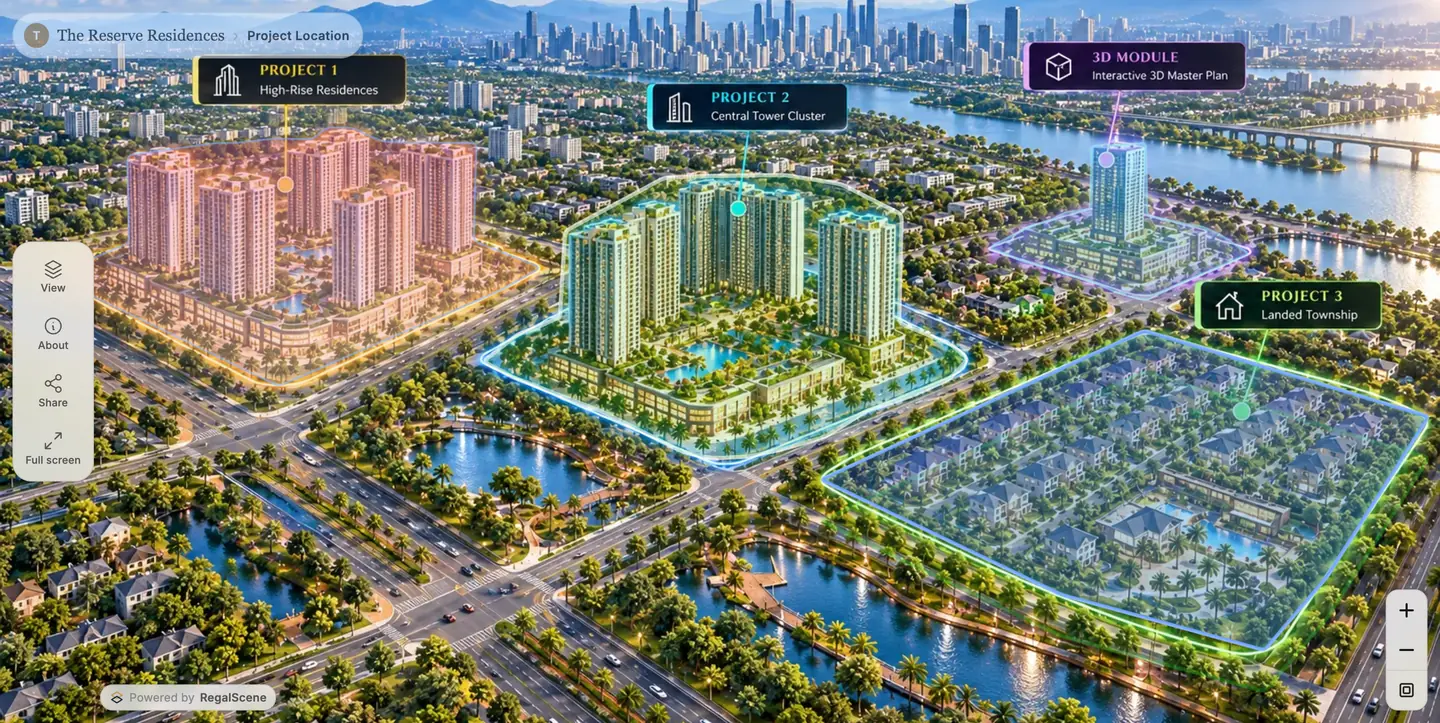
- An interactive master plan. Your site plan becomes navigable: districts, phases and buildings a buyer can open rather than look at.
- Buildings, floors and units. Elevations and floor plans become a path from the development down to one specific home.
- Live availability on the artwork. The developer's unit schedule sits on your visuals, so a buyer sees what is available, reserved, held or sold while they are looking at it.
- Enquiries attached to a unit. A buyer asks about a specific home rather than filling in a general form, and the developer's team receives the context.
- One experience on every screen. The same thing runs on a buyer's phone, the developer's website, their agencies' sites and the gallery screen.
How it divides
You keep the client. We build the interactive layer.
You bring
- The developer relationship, and the trust behind it
- Creative direction and the visual language of the project
- The master plan, renders, floor plans and unit layouts
We bring
- Building the experience and preparing the assets for it
- Inventory, availability and enquiry handling
- Hosting, updates and support once it is live
Commercial structure is agreed per engagement, against what each side is delivering on that project. We would rather scope a first project properly than sign a general arrangement before either of us knows how the work divides in practice.
Why it is worth your time
It asks for more of your work, not less.
A static brochure needs a hero image and a handful of elevations. An experience a buyer explores needs the whole development covered: every building, every typology, interiors for each unit type, and new material each time a phase is released.
It also changes when the conversation happens. Instead of being briefed at the start and paid at the end, you stay attached to a development that keeps needing visual work for as long as it is selling.
Questions
Questions studios ask
Do we need a software team to offer this?
No. You supply the visual material you already produce. RegalScene builds the interactive experience from it, hosts it and supports it. Nothing about your production pipeline has to change.
Who owns the relationship with the developer?
You do. The point of working together is that your relationship with the client extends past final delivery, not that it transfers to us. Creative direction stays yours as well.
What do you need from us to start?
The material a project already has: master plan artwork, building renders, floor plans and unit layouts. Alongside that we need the unit schedule from the developer, because availability is what turns a visualisation into something a buyer can act on.
How are partnerships structured?
Per engagement, against what each side is delivering on that project. There is no standard template to sign up to, and we would rather scope the first project properly than agree a general arrangement before either of us knows how the work divides.
Does this compete with the renders we already sell?
The opposite, in our experience. An interactive experience needs more of the assets you produce, not fewer: more angles, more unit types, more of the development covered. It tends to extend the brief rather than replace it.
Start with one project.
The useful first conversation is about a real development: one you have already visualised, or one you are pitching for. Show us the material and we will tell you what it would become.