Every property developer is being pitched technology right now: 3D worlds, VR headsets, AI copilots, blockchain title, the metaverse's latest rebrand. Most of it will not sell a single unit. The useful question for a 2027 marketing budget is narrower. Which technologies actually help a buyer understand a project, find the right asset, and enquire, and which are expensive theater?
This guide covers the real estate technology trends that matter for marketing and selling property in 2027, written for the team that has to launch on a deadline and show a return. It stays in one lane on purpose: the technology of the sales experience itself, not construction tech, smart-building IoT, or property fintech. Where a trend earns its cost, we say so. Where it mostly wins pitches, we say that too.
The digital sales center replaces the brochure stack
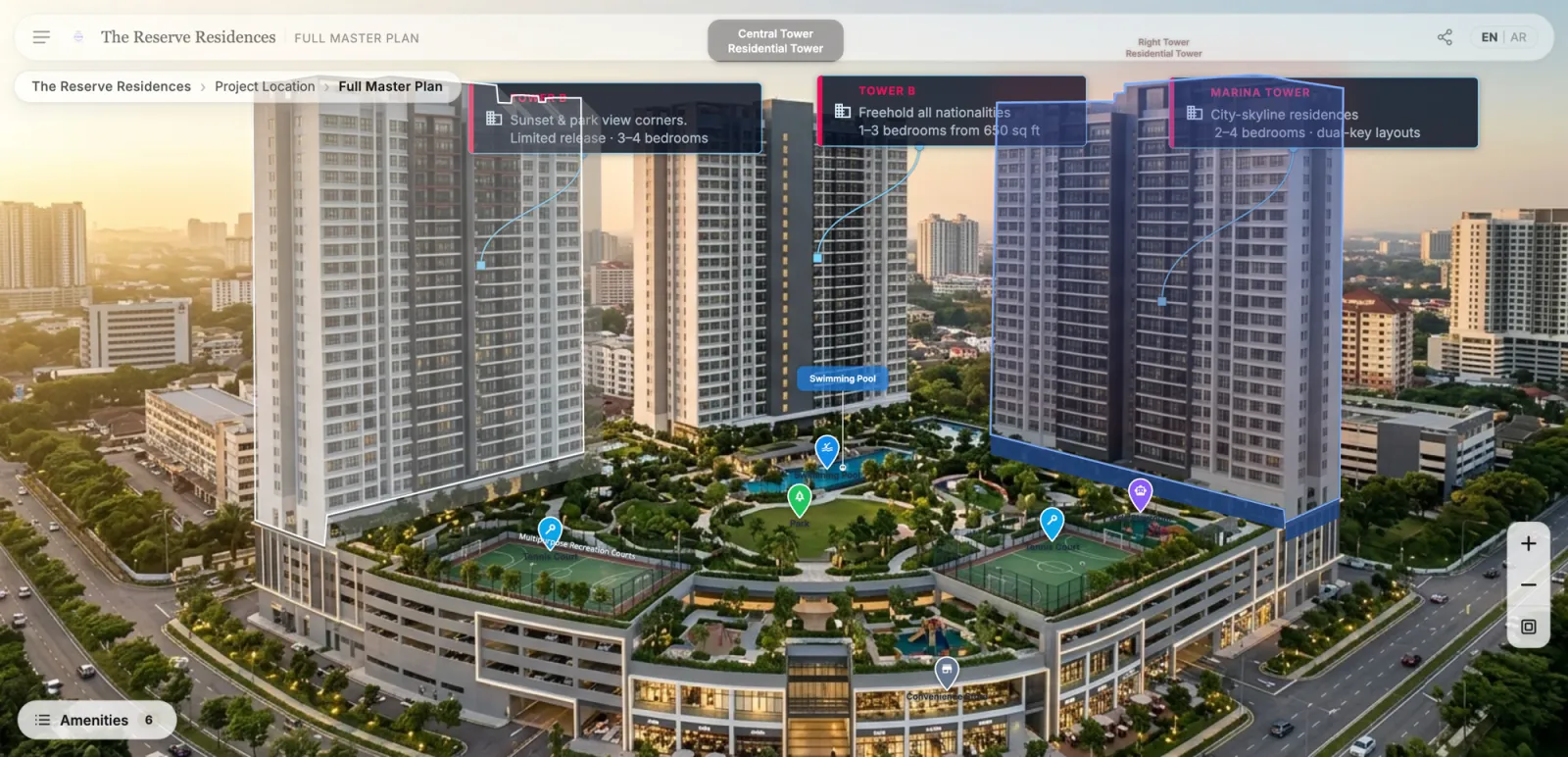
For years the launch kit was a PDF brochure, a price list, a render gallery, and a contact form. In 2027 that stack is collapsing into one interactive experience: a digital sales center where a buyer moves from the master plan to a building, floor, and individual unit, sees live availability, and enquires from the exact home they are looking at.
The change is not cosmetic. A brochure asks the buyer to interpret a plan; an interactive experience lets them explore it, and every move they make becomes information the sales team can act on. The assets that feed it are the ones developers already commissioned, reused rather than rebuilt: master plans, floor plans, elevations, and renders.
The brochure is becoming a fallback, not the main event. The projects that treat the interactive experience as their front door are the ones setting buyer expectations for everyone else.
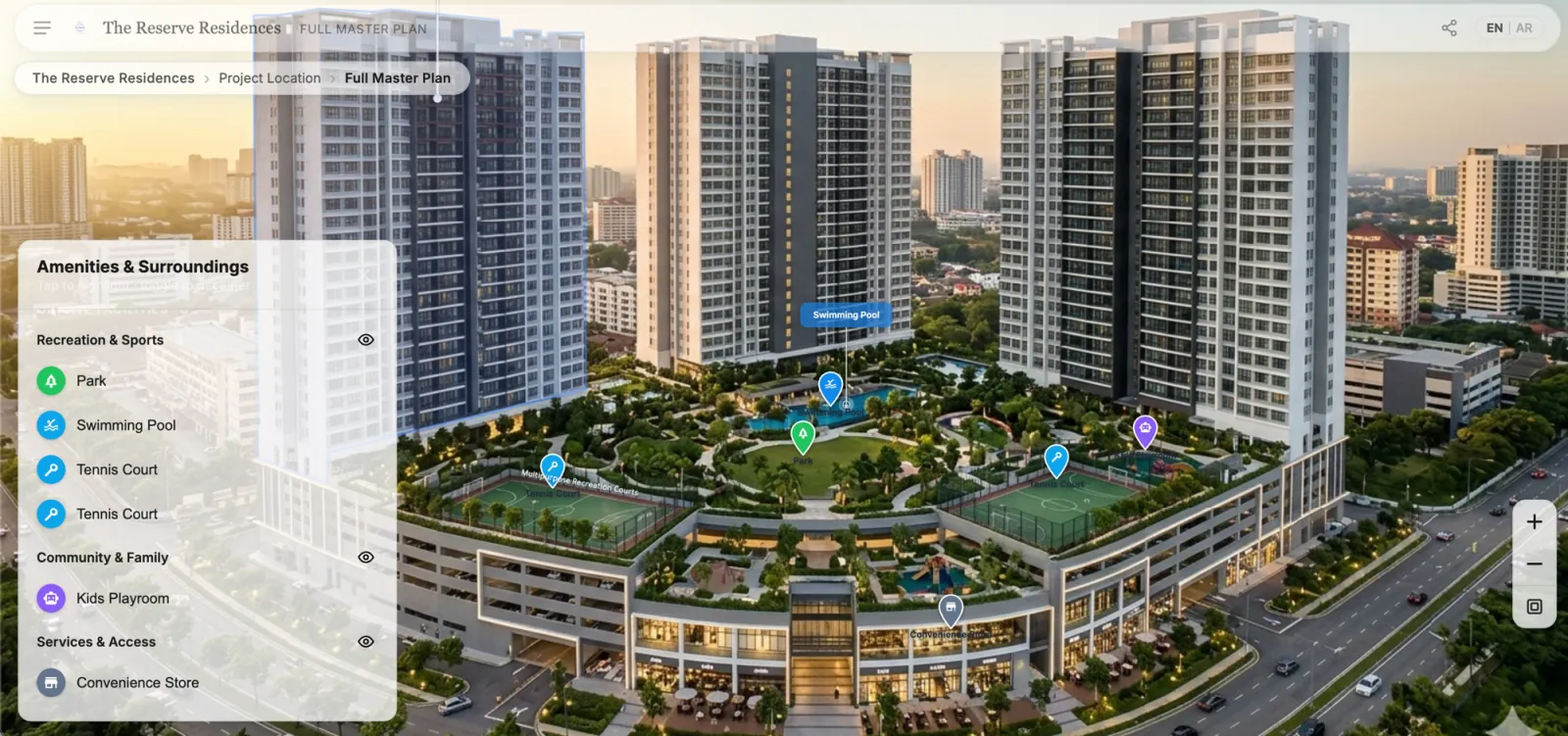 Live demoExplore a live digital sales centeropens the interactive RegalScene demo in a new tab
Buyer-intent analytics turn browsing into demand data
The most valuable thing an interactive experience produces is not the enquiry. It is the behavior before the enquiry: which buildings buyers open, which unit types they compare, which price bands they filter to, and where they leave.
This is the trend most render and map vendors cannot follow, because they have no lead engine and no funnel beneath the visuals. In 2027 the developers pulling ahead are reading demand from exploration, seeing which units buyers actually want before a single call, and receiving a lead that already carries its context instead of a name and a phone number.
A cold lead is a name; a warm lead is a journey. The technology that captures the journey is what turns a marketing spend into a demand signal you can price and plan against.
Web-first beats app-first and heavy 3D
The last few years oversold two ideas: that buyers would download an app for your project, and that a game-engine 3D world was the premium choice. Both fight the same enemy, the phone in a buyer's hand on mobile data.
A massive master plan that loads in under a second in a normal browser will out-sell an impressive 3D build that takes fifteen seconds and drains the battery, because the second experience is often closed before it finishes loading. Full 3D and VR still have a place, but as moments inside the journey rather than its foundation. Performance has become a sales metric, not an engineering footnote.
In 2027, the fastest experience wins more often than the most realistic one. No install, no wait, and it works on the mid-range Android where most campaign traffic actually lands.
AI moves from novelty to quiet utility
Most 2027 trend lists lead with AI and stay vague. The honest version for property marketing is narrower and more useful. AI is already earning its place in a few specific jobs: drafting and translating campaign copy, generating first-pass image variations, qualifying and routing inbound leads, and answering repetitive buyer questions inside the experience.
Where it still underdelivers is anything that pretends to replace judgment, such as pricing a release, reading a market, or designing the buyer journey. The teams getting value treat AI as a fast assistant on the edges of the funnel, then measure whether it actually shortened the path to an enquiry.
Use AI where it saves hours on repetitive work, and distrust it where it claims to replace a decision. The label matters less than whether it moves a buyer one step closer.
Distribution goes borderless and embeddable
An experience that only lives on your own website reaches a fraction of its audience. The 2027 pattern is distribution: the same interactive experience embedded on agency and broker sites with your brand intact, shared into the channels buyers already use, and reachable from a QR code on a hoarding or inside a message thread.
For developers, this rewrites the economics of reach. A launch in one city can be sold through agency networks in another, and an overseas buyer can explore the project at midnight in their own time zone without booking a flight. The lead still returns to you, carrying what the buyer explored, wherever the experience was embedded. Messaging-first capture, from WhatsApp to WeChat, meets buyers in the app they already have open.
Reach in 2027 is less about traffic to one website and more about placing one live experience everywhere buyers already are.
Multilingual, localized sales become standard
Cross-border property buying is now ordinary, and buyers expect the experience to meet them in their language and reading direction. For GCC launches that means proper Arabic with a right-to-left layout, not a translated afterthought. For Chinese buyers it means the industry's own vocabulary and the messaging apps they actually use.
Localization has become a sales requirement rather than a courtesy. A bilingual, brand-consistent experience reaches a diaspora investor and a local family from the same link, at the same time, without a separate microsite for each market. The developers treating language as part of the product are the ones winning regional launches.
Live inventory becomes the single source of truth
Availability never stops moving. Units get reserved, floors release, prices change, new phases launch. In 2027 the experience and the inventory are managed as one live system, so the status a buyer sees is the status the sales team quotes from. When a unit sells, every level of the experience already knows.
This matters most at scale. A township or mixed-use development releasing phases over years needs to carry the next district dark until launch, then publish it into the same link every buyer and agent already holds. No new microsite, no re-education, no price list nobody trusts. The update economics are frequently the whole business case: a change that used to take a week of agency work becomes a two-minute edit.
When inventory is live, the experience stops aging the moment it launches. It becomes a system the team runs, not a campaign asset that goes stale.
What to prioritize first
Not every trend deserves budget this year, and the sequence matters more than the list. A practical order for a 2027 launch:
- Start with the digital sales center and the analytics under it. It reuses assets you already own, works on mobile, and produces demand data from day one. This is the foundation the rest sits on.
- Get distribution right early. An embeddable, shareable experience multiplies the reach of everything else before you spend more on media.
- Localize for your real buyers. If a meaningful share of demand is cross-border, language is product, not polish.
- Add immersion selectively. Commission 3D and 360 for the moments that genuinely change a decision, layered into the fast journey rather than replacing it.
- Apply AI to the repetitive edges. Content, translation, and lead handling first; keep human judgment on pricing and strategy.
Buy the technology that helps a buyer act before the technology that looks impressive in a pitch.
The RegalScene Approach
RegalScene sits at the center of this shift, turning the plans and renders developers already have into an interactive digital sales center platform with live availability, buyer-intent analytics, embeddable distribution, and multilingual experiences, built and updated with the developer rather than handed over as a frozen build. Where immersion adds value, it becomes part of the journey. Where a technology adds cost without helping the buyer, it is not added for appearance.
The through-line of every trend that matters in 2027 is the same. The best property technology is not the most advanced. It is the technology that makes a project easier to understand, easier to explore, and easier to act on.
Related reading:
- What Is a Digital Sales Center? The Complete Guide
- 2D vs 3D for Property Sales: Choosing the Right Experience, Not the Most Expensive One
- Interactive Experiences vs Static Renders: What Actually Generates Leads
- How Massive Master Plans Stay Fast in a Normal Browser
- PropTech Sales Platform Guide: Choosing a Property Sales Platform
RegalScene turns the visual assets developers already have into interactive, measurable, and reusable property sales experiences. See the platform or book a demo.