A Selangor development is rarely sold in one launch. It releases in phases, across years, sometimes across a decade. The habit is to give each phase its own brochure and its own microsite, and it feels tidy, but it quietly costs the developer. By the fourth release, nobody is sure which link is current, the buyer who loved phase one has lost the thread, and the agent is presenting whichever PDF they happened to keep.
The phases belong to one project. Presenting them as separate launches throws away everything each launch earned.
Why a microsite per phase works against you
Launching a fresh site for each phase spends budget rebuilding an audience the previous phase already had. Every release starts its ranking from zero. The links from phase one, shared by buyers and agents, now point at an old page. Availability drifts between the phase sites, so a buyer comparing phase two against phase three is reading two sources that disagree. Over a project that sells for years, this repeats again and again.
The lifecycle of a development is long enough that the cost compounds. Continuity, not a new site each time, is what keeps the audience.
A phased project is one asset released in chapters. Marketing it as separate books throws away everything the last chapter earned.
One experience, every phase
An interactive master plan holds the whole project and reveals it as it releases:
- Master plan. The full development, precincts outlined and clickable, phases marked, amenities as landmarks.
- Phase and precinct. A live precinct opens to its clusters and product; a future phase shows as coming, then goes live on launch day.
- Unit. Every home shows availability on the actual plot or apartment, with price under the developer's display policy.
- Enquiry. The buyer enquires from the unit, and the lead carries which phase, precinct, and unit.
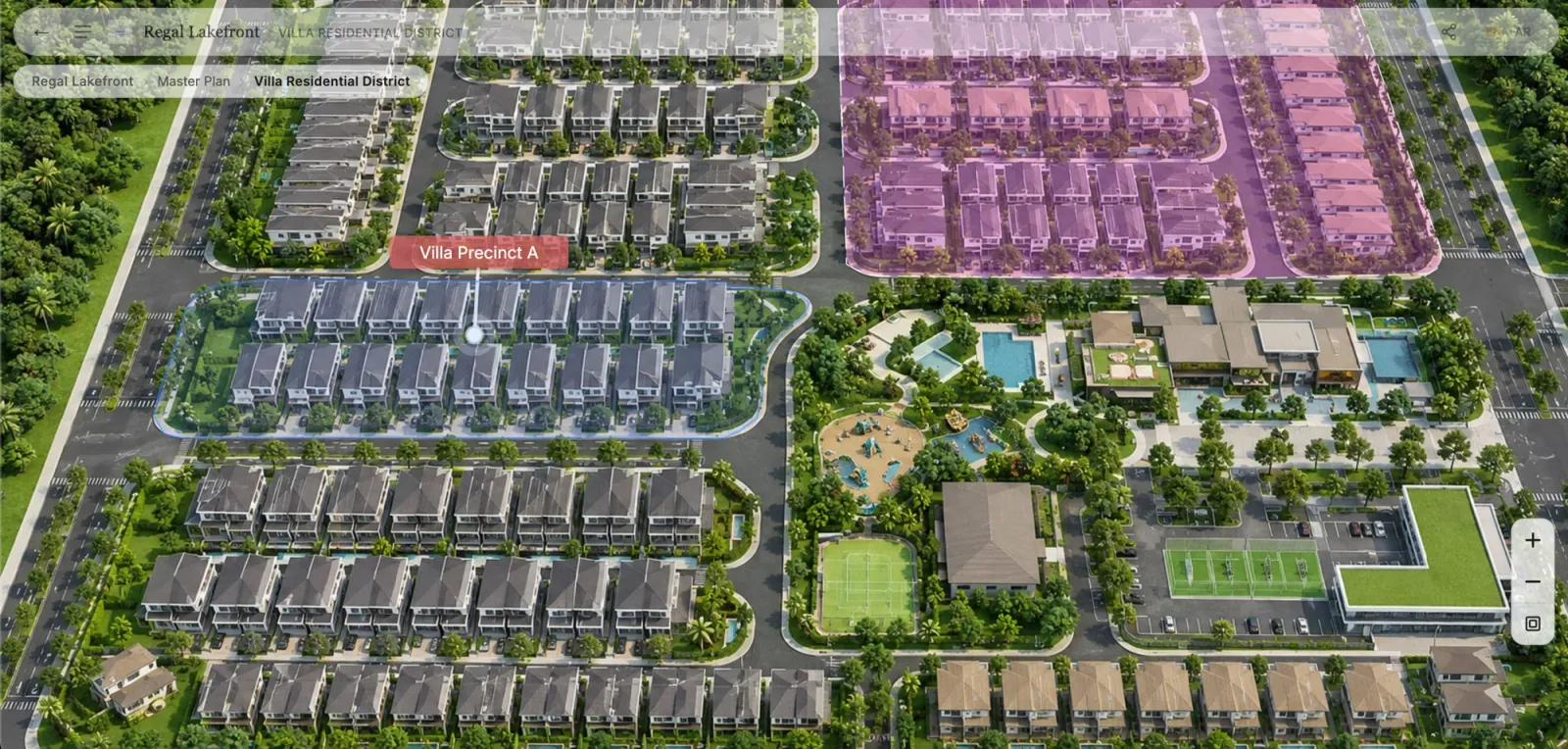
When the next phase launches, it publishes into this same experience, into the link every buyer and agent already holds. A buyer who bookmarked the project in year one opens the same link in year four and finds the new precinct waiting, priced, and available. This is the release mechanism behind marketing a Selangor township, seen from the angle of the phases themselves.
Phase-aware publishing, in practice
The mechanism that makes this work is holding a phase dark until launch. A future precinct is prepared in advance, kept out of public view, and switched live on launch day into the existing experience. Nothing about the current phases changes; the new one simply appears. For off-plan phases, this is also how availability stays honest: the moment a unit reserves, the plan reflects it, across every phase at once.
Many phases does not mean many views
The instinct is that more phases must cost proportionally more. They do not. RegalScene scopes and quotes each project around what will be delivered and operated, not a plot, a unit, or a phase. A project could begin with one master-plan view, and deeper views are added only where buyers want them, with future phases publishing into the existing views.
Every home in every phase sits as inventory on those views. The reasoning behind scoping projects rather than charging per unit explains why the phase count does not drive the price, and the pricing page sets out what shapes a quote.
The number of phases does not set the cost. The depth of the journey does.
What this asks of the developer
Three things make a long-lived phased experience hold up. Publishing has to be phase-aware, so a future release is prepared, held back, and switched live without disturbing the current phases. The inventory has to be the live source of status across all phases at once, so availability never disagrees with itself. And the link has to be permanent, so the audience built in year one is still reachable in year eight, and a large project stays fast on a phone the way large master plans stay fast in a browser.
See your phases in one experience
The fastest way to judge this is on a project you are releasing in phases. Bring a master plan and a unit schedule, and watch a new phase publish into the same link every earlier buyer already holds.
Related reading:
- Interactive Master Plans for Selangor Townships
- Property Continuity: The Master Plan Across a Project's Lifecycle
- Selling Off-Plan Property Digitally: Reducing Buyer Uncertainty
- How Massive Master Plans Stay Fast in a Normal Browser
- Why RegalScene Isn't Priced Per Unit
RegalScene turns the master plans and floor plans Selangor developers already have into one interactive experience that carries every phase, from launch to launch, in any browser. See the platform or tell us about your project.