A Kuala Lumpur development with three or four towers is often sold as three or four separate things. A brochure per tower, a floor plan file per typology, an availability sheet per phase, and no single place a buyer can stand and see the whole project. A buyer weighing a high floor in one tower against a mid floor in another opens several files and trusts none of them.
The towers belong to one project. The way they are presented should say so.
Where separate tower brochures break down
Multi-tower selling fails at the seams between towers. Each tower lives in its own file, so a buyer cannot easily compare across them, and the developer cannot see interest at the project level. Availability drifts between the tower sheets, so a buyer comparing two towers is reading two documents that disagree. And when a new tower launches, it arrives as a fresh microsite that starts its audience from zero, disconnected from the project the earlier buyers already explored.
Nobody buys "the development." They buy a unit in a specific tower, and the path across the towers has to be walkable so they can find the right one.
A multi-tower project sold as separate tower brochures asks the buyer to assemble it in their head. Most will not.
One site plan, every tower
An interactive master plan holds the whole project and lets a buyer move across it:
- Site plan. The development from above, towers labeled and clickable, phases marked, amenities as landmarks.
- Tower. A tower opens to its stacking plan, floors banded by availability, the sold-out bands obvious at a glance.
- Floor and unit. A floor plate shows units in place; a unit shows its layout, view, and price under the developer's display policy.
- Enquiry. The buyer enquires from the unit, and the lead carries which tower, floor, and unit.
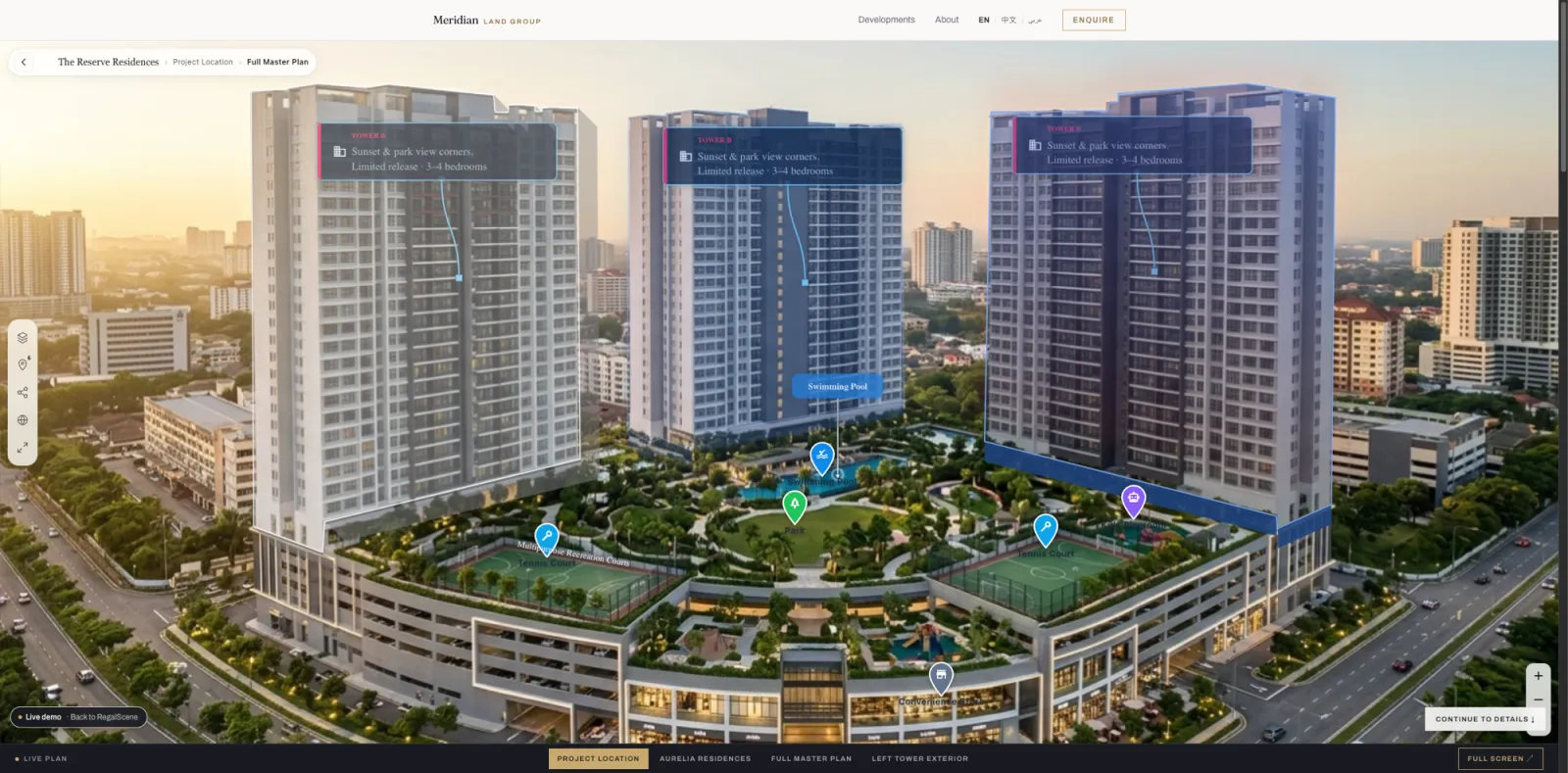
A buyer moves from the whole project to a single available apartment in a specific tower, following the same map, building, floor, and unit structure throughout. Each tower is still a full interactive sales gallery; the site plan is the front door that ties them into one project.
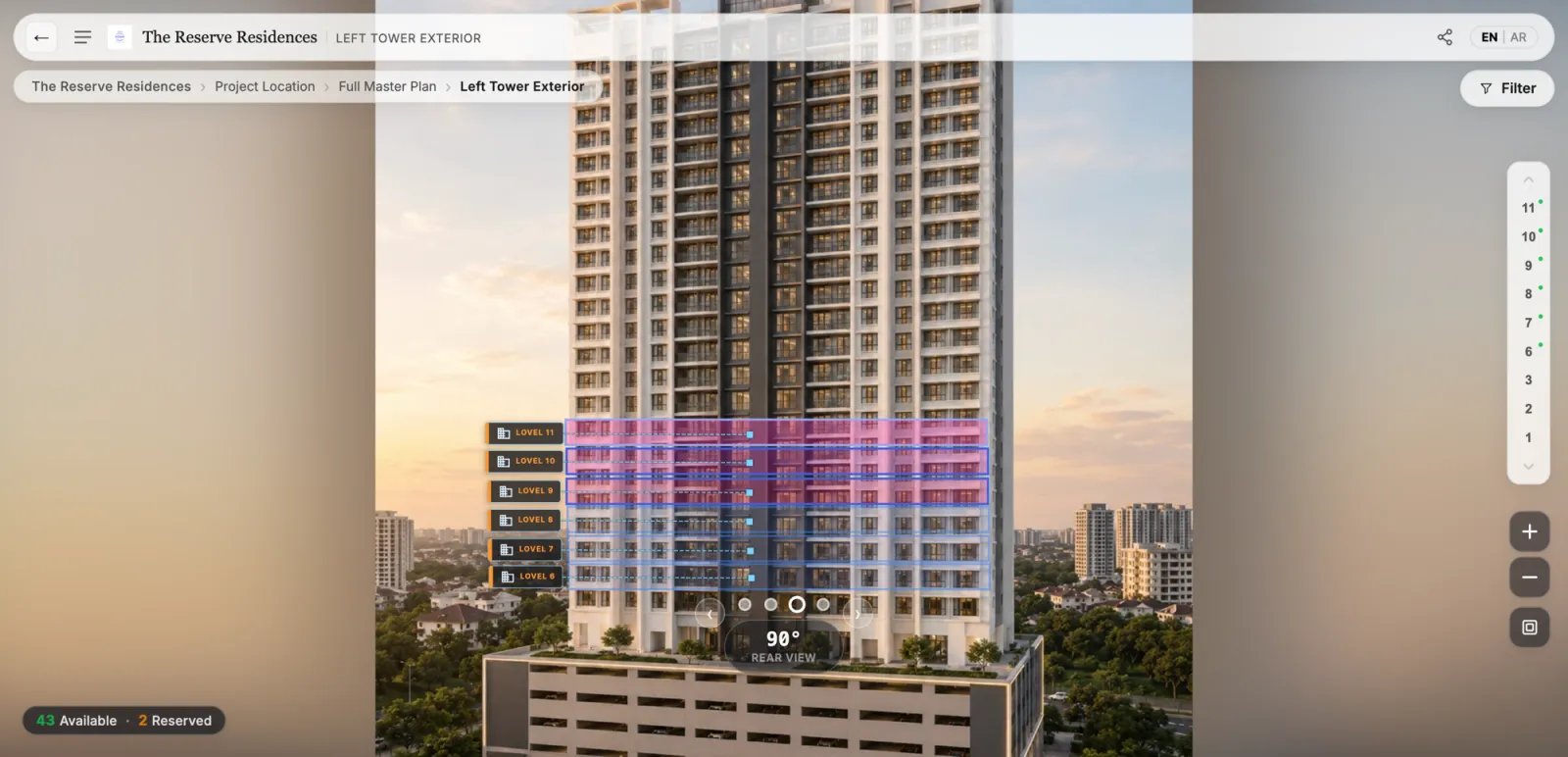
When the next tower launches, it publishes into this same experience, into the link every buyer and agent already holds, not a new microsite. For a developer with several projects, the portfolio map extends the same idea across developments.
More towers does not mean more cost per tower
The instinct is that each tower must cost more to put online. It does not. RegalScene scopes and quotes each project around what will be delivered and operated, not a tower or a unit. A tower's stacking plan is one view; the hundreds of apartments inside it are inventory on that view.
A multi-tower KL project could begin with a site plan and one tower, and add views only where buyers want them: a second tower, a 360 view, a show-unit walkthrough. The reasoning behind scoping projects rather than charging per unit covers why the tower count does not drive the price, and the pricing page sets out what shapes a quote.
The number of towers does not set the cost. The number of authored views does.
What this asks of the developer
Three things make a multi-tower experience hold up. The inventory has to be the live source of status across all towers at once, so availability never disagrees with itself. Publishing has to be phase-aware, so a future tower is prepared, held back, and switched live into the existing link. And the display policy stays the developer's decision, across every tower. A large project stays fast on a phone for the reason large master plans stay fast in a browser.
See your towers in one experience
The fastest way to judge this is on a project you are selling now. Bring a site plan and a unit schedule, and watch a buyer move from the whole development to a single available apartment in a specific tower to an enquiry, in a browser, on a phone.
Related reading:
- Interactive Sales Galleries for KL High-Rise Projects
- One Master Plan, Many Projects: The Developer Portfolio Map
- How Massive Master Plans Stay Fast in a Normal Browser
- Map, Building, Floor and Unit Views: How to Present a Project Online
- Why RegalScene Isn't Priced Per Unit
RegalScene turns the site plans, stacking plans, and floor plans KL developers already have into one interactive experience across every tower, in any browser. See the platform or tell us about your project.