Walk into any kantor pemasaran (the marketing office) for a township in Jabodetabek or Surabaya, and the first thing you meet is the maket. The scale model sits under lights in the middle of the room: clusters laid out, roads threading between them, the clubhouse and the lake rendered in miniature. It is usually the most expensive object in the building, and it earns that.
The maket answers the question every buyer actually has, which is spatial. Where is this cluster in relation to the entrance? How far is the rumah tapak (landed house) from the school? Which kavling (plot) backs onto the green space? A brochure argues. A maket shows.
Then the buyer leaves, and the explanation stays behind.
What the maket cannot do
The limitation is not quality. It is reach and currency.
A maket works on the people standing in front of it. An agent in Bandung, a buyer comparing two projects from Singapore, an investor who saw the ad on Instagram at eleven at night — none of them are in the room. For a project selling across cities and through agency networks, that is most of the audience.
A maket is accurate on the day it is built. Phase two changes, a cluster is renamed, a block sells out. The model does not move, so the status migrates to stickers on the acrylic, a printed list on the desk, and a WhatsApp group that may or may not be current. Buyers learn to ask the agent rather than trust the display.
A maket cannot be sent. The single most common thing a buyer does after a good sales-office visit is describe the project to someone who was not there — a spouse, a parent, whoever is paying. They do it from memory, holding a brochure.
What an interactive masterplan adds
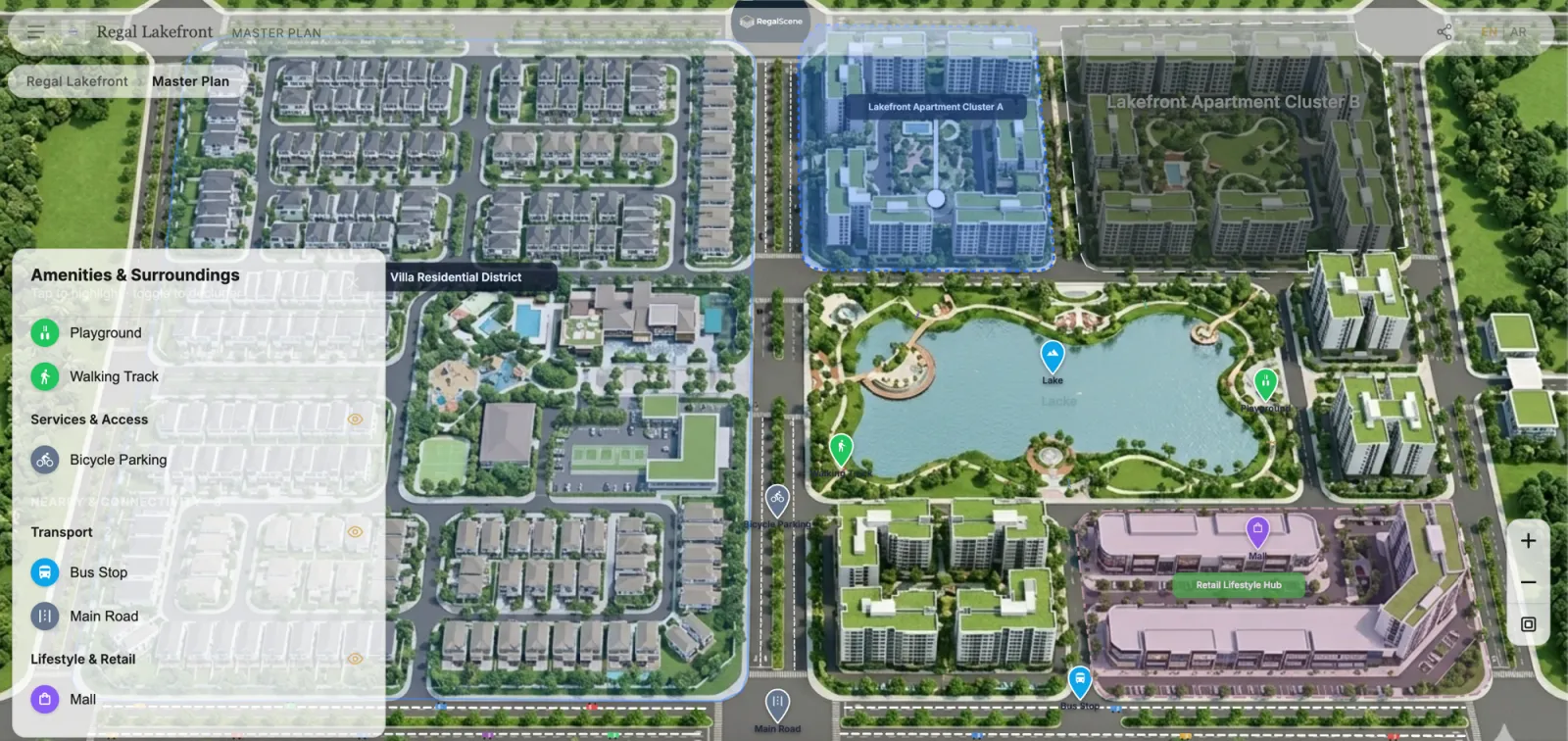
An interactive masterplan is the same spatial explanation, built from the artwork you already commissioned, and reachable through a link.
The buyer opens the site plan on their phone, moves across the development, taps a cluster, opens a block, picks a floor, and lands on a unit that carries its current status. Nothing is downloaded and no app is involved. The link works from a WhatsApp message, an agent's tablet at a roadshow, or a touchscreen in the marketing office standing next to the maket.
Availability is the part the physical model structurally cannot do. Status comes from the unit inventory your team already maintains rather than from the artwork, so a cluster that sold on Friday reads as sold on Saturday, in every channel at once, without anyone reprinting anything.
For apartemen towers the same structure runs vertically: the tower elevation, then the floor plate, then the unit. For ruko (shophouse) rows and kavling releases it runs across the site plan. The navigation is the same because the buyer's question is the same.
Running both, which is what most developers do
The framing that causes trouble is replacement. It is the wrong one.
The maket is the best thing in the room and should stay there. What it needs is a digital twin of its function — not a rebuild of the project in a game engine, which is expensive, slow to change, and heavy on the phones buyers actually use. Mapping over the renders and site plans you already own is faster and survives a layout change without a re-render.
Put the interactive masterplan on the touchscreen beside the maket, and the agent can do something they cannot do with the model: open a unit, show its real status, and send the buyer home with the same view in their pocket.
The maket closes the visitor. The interactive masterplan reaches everyone else.
What this changes in practice
Three things tend to shift once the masterplan is live.
The kantor pemasaran stops being the only place the project can be explained properly. Agents across your network share one link rather than a folder of JPEGs at different vintages, which is also how availability stops drifting between cities.
Enquiries arrive with context. Instead of "interested in Cluster B", the message carries which unit the buyer was looking at when they asked, which is a different conversation for the sales team to open.
And the project keeps a front door after the launch campaign ends, rather than retiring with the showroom.
Related reading:
- What Is an Interactive Master Plan?
- A Real Interactive Master Plan, Screen by Screen
- How Indonesian Developers Manage Agency Networks Digitally
- Digital Property Sales in Southeast Asia
RegalScene turns the master plan, site plan and renders a project already owns into an interactive sales experience with live availability and enquiries that arrive with the unit attached. See how the platform works, or talk to us about your project.