A Penang mixed-use development is several projects wearing one name. Retail on the lower levels, apartments above, sometimes offices alongside, each with a different buyer, a different pricing logic, and a different sales pace. Marketed the usual way, it becomes a stack of brochures, one per product, and a buyer interested in an apartment has to wade past the retail deck to find it. The one thing a mixed-use project needs, a way to send each buyer to their product without losing the shared story, is exactly what static collateral cannot do.
This is where a navigable hierarchy earns its place.
The Penang context: constrained land, mixed products
Penang builds mixed-use because the island's land is tight. Going up and combining uses on one site is how developments work here, which means a single project routinely holds retail, residential, and leisure in one footprint. Each of those is a different sale. A flat brochure treats them as one document and asks every buyer to find their part.
An interactive master plan treats them as what they are: distinct products under one roof, each with its own journey.
Why static assets struggle with mixed use
The failure in mixed-use marketing is routing. A retail investor and an apartment buyer want different things, but the brochure shows them the same pages and leaves each to locate their product. Availability is scattered across documents, so a buyer cannot tell what remains in their part of the project. And the shared story, the amenities and the address that make the mix worth more than its parts, gets lost in a pile of separate decks.
The reasons static brochures fail apply to every product type; mixed use multiplies them by the number of products in one project.
A mixed-use project is several buyer journeys in one site. One flat brochure serves none of them well.
One master plan, each product its own journey
An interactive master plan routes each buyer to their product while keeping the project whole:
- Master plan. The development from above, its uses outlined, amenities and frontage as landmarks, each product clickable.
- Product. Apartments lead to towers, floors, and units; retail leads to units with frontage and leasing states; offices carry their own attributes.
- Unit. Every unit shows availability on the actual plan, with price or lease terms under the developer's display policy.
- Enquiry. The buyer enquires from the unit, and the lead carries which product and which unit.
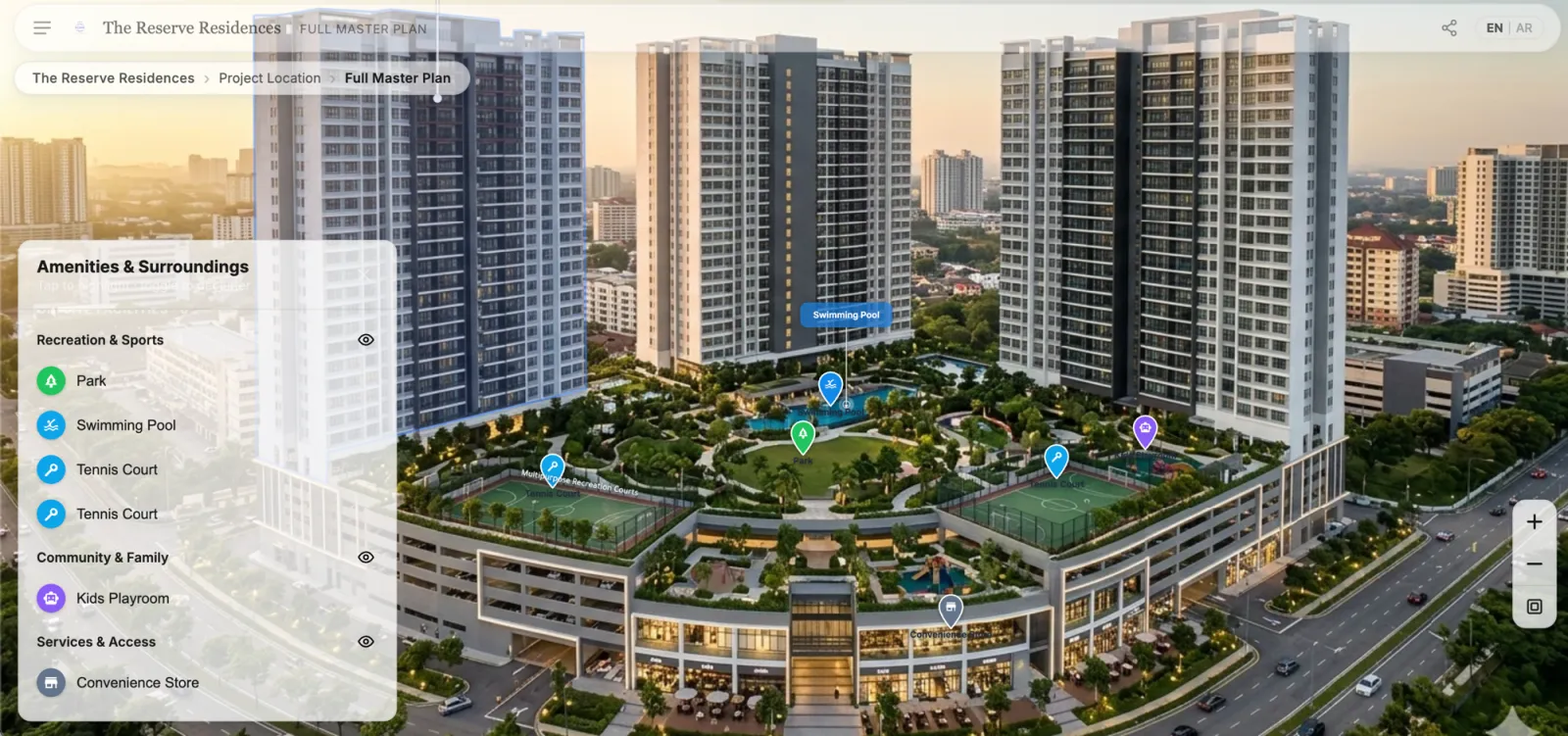
An apartment buyer follows the same map, building, floor, and unit structure as any high-rise; a retail investor follows the same idea into interactive leasing with frontage and lease states. Both live under one master plan, so the shared amenities and address stay part of every product's story. It is the same townships-and-mixed-use hierarchy, tuned to a single dense Penang site.
Several products does not mean a heavier bill
The instinct is that more product types must cost more to put online. They do not, by count. RegalScene scopes and quotes each project around what will be delivered and operated, not a product or a unit. A mixed-use development could begin with one master-plan view and add a product's depth only where buyers want it: a residential tower's floors, a retail level's frontage.
The units across every product sit as inventory on those views. The reasoning behind scoping projects rather than charging per unit explains why the product mix does not drive the price, and the pricing page sets out what shapes a quote.
The number of products does not set the cost. The depth of each journey does.
What this asks of the developer
Two things make a mixed-use experience hold up. The inventory model has to hold different product attributes honestly, so apartments carry floors and typologies while retail carries frontage and lease terms, without forcing everything into one template. And the display policy stays the developer's decision per product, so sale prices and lease terms are disclosed on the developer's terms. This is the same interactive layer behind Penang waterfront and high-rise discovery, applied where several products share one site.
See your mixed-use project made navigable
The fastest way to judge this is on a development you are selling. Bring a master plan and the schedules for each product, and watch a retail investor and an apartment buyer each reach their own unit from the same experience, in a browser, on a phone.
Related reading:
- Interactive Discovery for Penang Waterfront & High-Rise
- Commercial Property Leasing Goes Interactive: Offices, Retail, and Industrial
- Interactive Master Plans for Townships and Mixed-Use Developments
- Map, Building, Floor and Unit Views: How to Present a Project Online
- Why RegalScene Isn't Priced Per Unit
RegalScene turns the master plans and floor plans Penang developers already have into one interactive experience where each product finds its buyer, in any browser. See the platform or tell us about your project.