A Dubai master community is not one building. It is several districts, many towers, and thousands of apartments releasing in phases over years. Marketed the usual way, that becomes a library: a brochure per tower, a floor plan file per typology, an availability sheet per phase, and no single place a buyer can stand and see the whole thing. The first question anyone asks about a large community, where does this tower sit, and what is still available in it, has no good answer across a folder of PDFs.
This is the scale an interactive master plan was built for. Here is what it changes for a multi-tower Dubai project.
The Dubai context: multi-district, multi-tower, phased
Dubai builds large communities that release over time. A development such as Dubai Creek Harbour, a roughly 6-square-kilometer waterfront master plan organized into nine districts, spreads towers and products across the site and opens them in phases. Dubai Hills Estate, a flagship master community, mixes townhouses, villas, and apartments in one place. These are public examples of the shape: several districts, many towers, mixed products, released over years.
That structure is hard on static collateral, which fragments into one document per tower and per phase, each aging at its own speed. RegalScene is not affiliated with, engaged by, or endorsed by any development named here; they appear only as public examples of scale.
Where a folder of tower brochures breaks down
The failure in multi-tower selling is navigation. A buyer interested in the community cannot easily compare a high floor in one tower against a mid floor in another, because each tower lives in its own file with its own availability. The floor plan and the price list do not talk, so a buyer who likes a unit still cannot tell whether it is available without messaging an agent. And when a new tower launches, it arrives as a fresh microsite that starts its audience from zero, disconnected from the community the earlier buyers already explored.
Nobody buys "the community." They buy a specific unit in a specific tower, and the path to it has to be walkable.
A multi-tower community sold as separate tower brochures asks the buyer to assemble the project in their head. Most will not.
One master plan, every tower
An interactive master plan holds the whole community and lets a buyer walk it:
- Master plan. The community from above, districts outlined and clickable, towers placed, phases marked, amenities as landmarks.
- District and tower. A district opens to its towers; a tower opens to a stacking plan banded by availability, the high floors and sold-out bands obvious at a glance.
- Floor and unit. A floor plate shows units in place; a unit shows its layout, view, and price under the developer's display policy.
- Enquiry. The buyer enquires from the unit, and the lead carries which district, tower, floor, and unit.
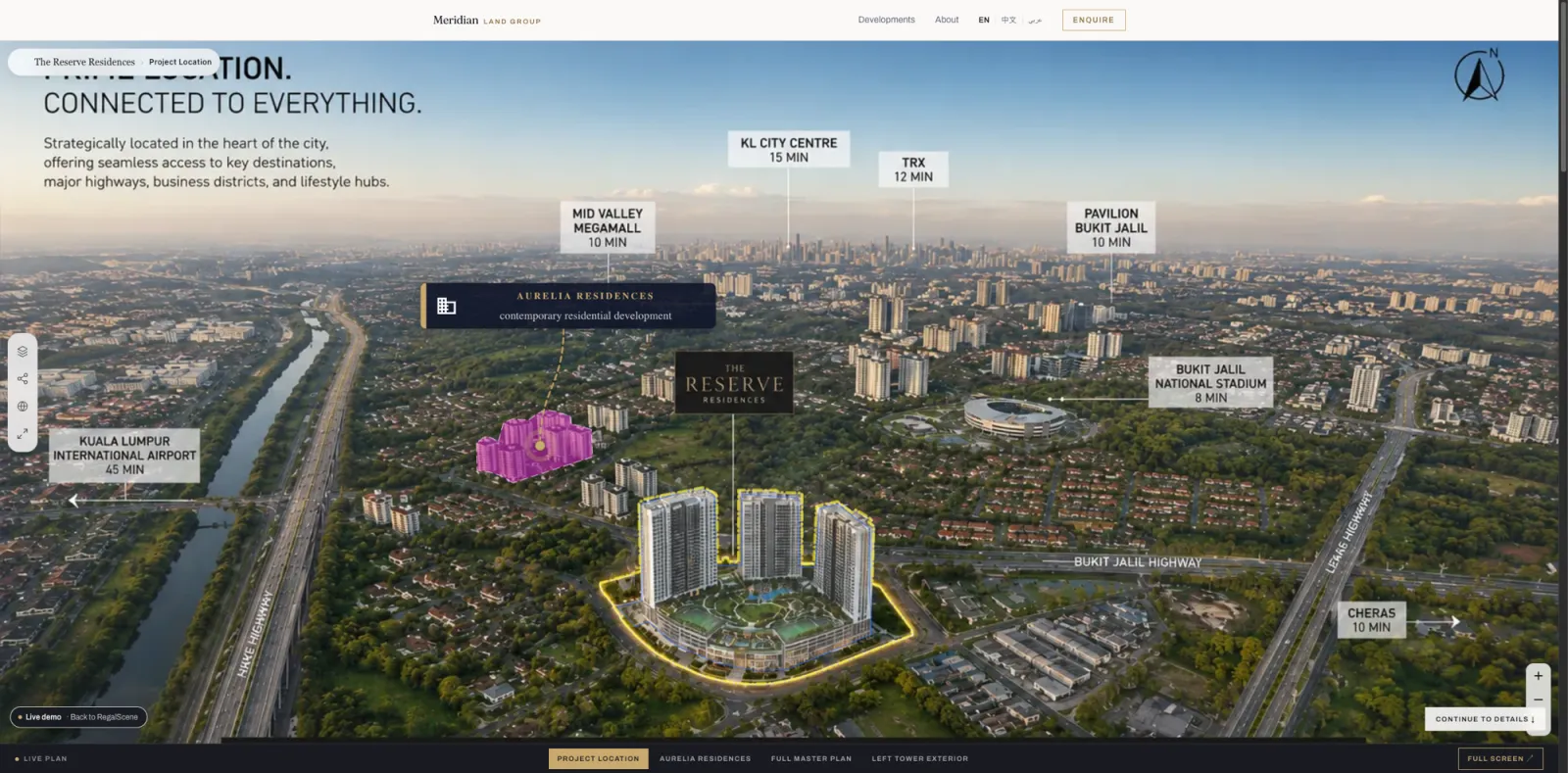
A buyer moves from the whole community to a single available apartment in about a minute, following the same map, building, floor, and unit structure throughout. This is the same hierarchy behind a multifamily site plan that scales, extended across a community of towers rather than one building.
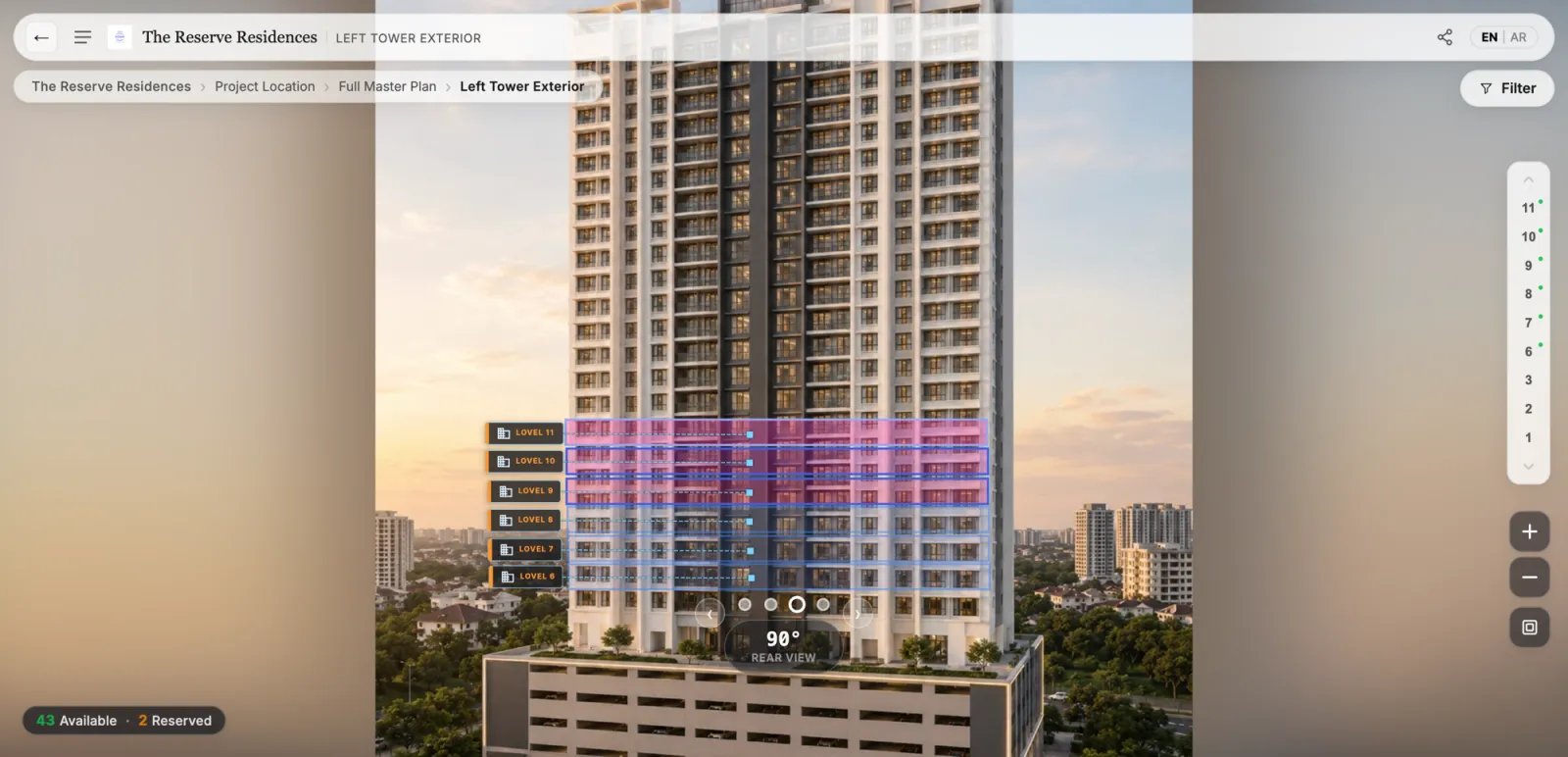
When the next tower launches, it publishes into this same experience, into the link every buyer and agent already holds, rather than a new microsite. The multi-project view extends the same idea across several communities in a developer's portfolio.
A larger community does not mean more views
The instinct is that more towers must cost proportionally more to put online. They do not. RegalScene scopes and quotes each project around what will be delivered and operated, not a tower, a floor, or a unit. A tower's stacking plan is one view; the hundreds of apartments inside it are inventory on that view.
A multi-tower community could begin with a master plan and one tower, and add deeper views only where buyers want them: a second tower, a 360 view from a high floor, a district aerial. The reasoning behind scoping projects rather than charging per unit covers why the tower count does not drive the price, and the pricing page sets out what shapes a quote.
The number of towers does not set the cost. The number of authored views does.
Built for the phone, and the phased launch
A Dubai community sells to buyers across the world and over several years. The experience opens in a normal browser from one link, with nothing to install, and a large multi-district community loads quickly on a standard smartphone for the reason large master plans stay fast in a browser. Because the link never changes, every phase publishes into the same place, and each release compounds the audience rather than restarting it.
What this asks of the developer
Three things make a multi-tower experience hold up. The inventory has to be the live source of status across all towers at once, so availability never disagrees with itself. Publishing has to be phase-aware, so a future tower is prepared, held back, and switched live into the existing link. And the display policy stays the developer's decision, so pricing is disclosed on the developer's terms across every tower and market.
For a community sold over years, the interactive master plan is a small line against the media budget of a single tower launch, and it serves every launch the community will have.
See your community made interactive
The fastest way to judge this is on a community you are selling now. Bring a master plan and a unit schedule, and watch a buyer move from the whole development to a single available apartment in a specific tower to an enquiry, in a browser, on a phone.
Related reading:
- Multifamily Interactive Site Plan Software: One Map to Every Unit
- One Master Plan, Many Projects: The Developer Portfolio Map
- Interactive Master Plans for GCC Property Sales
- Map, Building, Floor and Unit Views: How to Present a Project Online
- Why RegalScene Isn't Priced Per Unit
RegalScene turns the master plans, stacking plans, and floor plans Dubai developers already have into one interactive sales experience, from district to unit, in any browser. See the platform or tell us about your project.