A property developer usually knows almost nothing about a buyer until the moment they sign. Before that, the buyer is a name on a form and a phone number that may or may not answer. Everything that happened before the enquiry (which project, which building, which units, what they could afford, what made them hesitate) is invisible. That blind spot is expensive. It is why launches misprice, misjudge unit mix, and spend on the wrong audience.
Buyer intelligence closes the blind spot. It is what a developer learns from how buyers actually explore a project: the path they take, the choices they make, and the point where they stop. This guide is the map of that idea, and it links to the deeper pieces on each part. If you read one thing about digital property sales, read this and follow the threads.
From leads to journeys
The old unit of property marketing is the lead: a captured contact, counted and handed to sales. The problem is that a lead with no context is a coin flip. Buyer intelligence changes the unit from the lead to the journey. Every buyer who explores an interactive experience leaves a trail, and that trail is worth more than the contact at the end of it, because it tells you not just who enquired but what they wanted.
A lead tells you someone raised a hand. Buyer intelligence tells you what they were reaching for.
The journey is the raw material
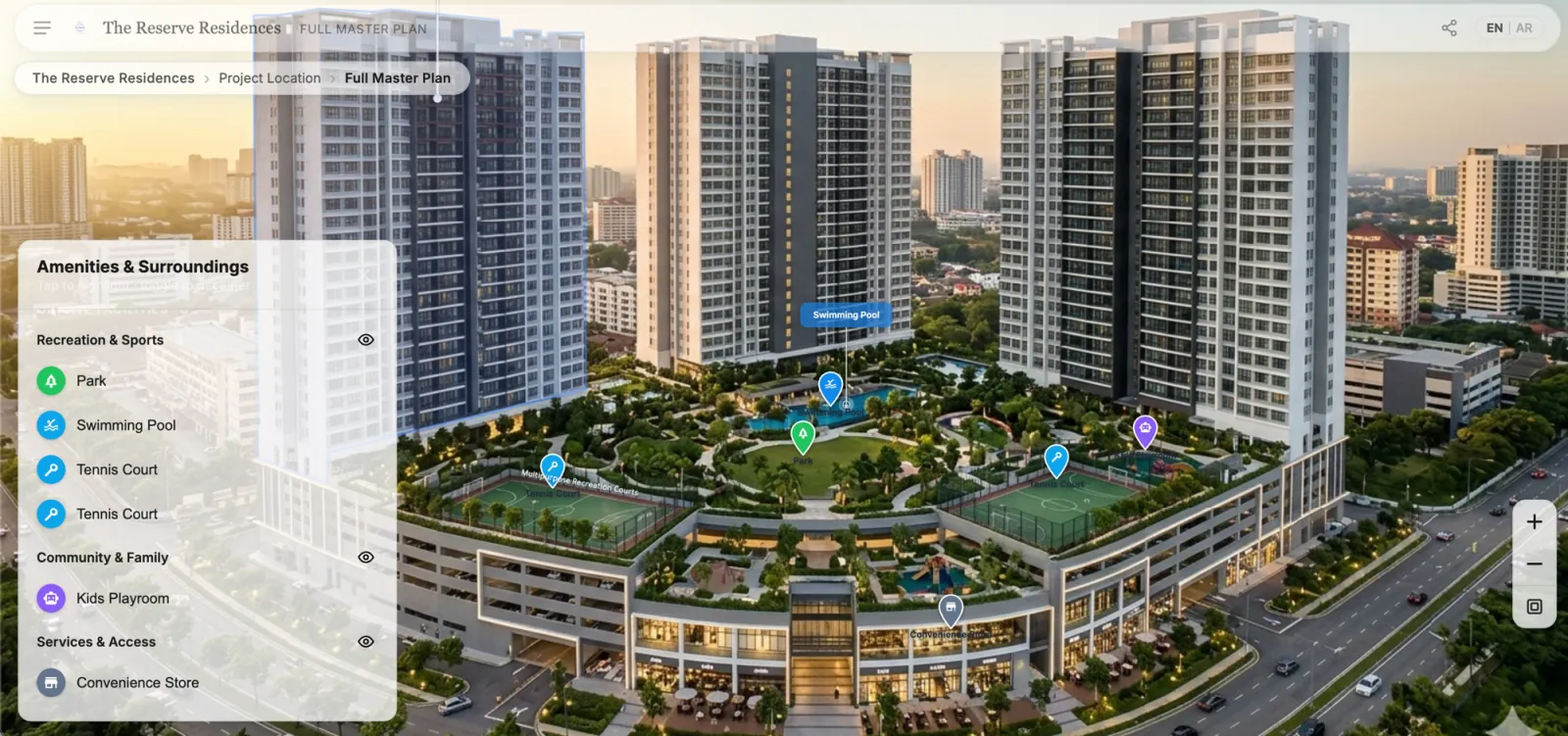
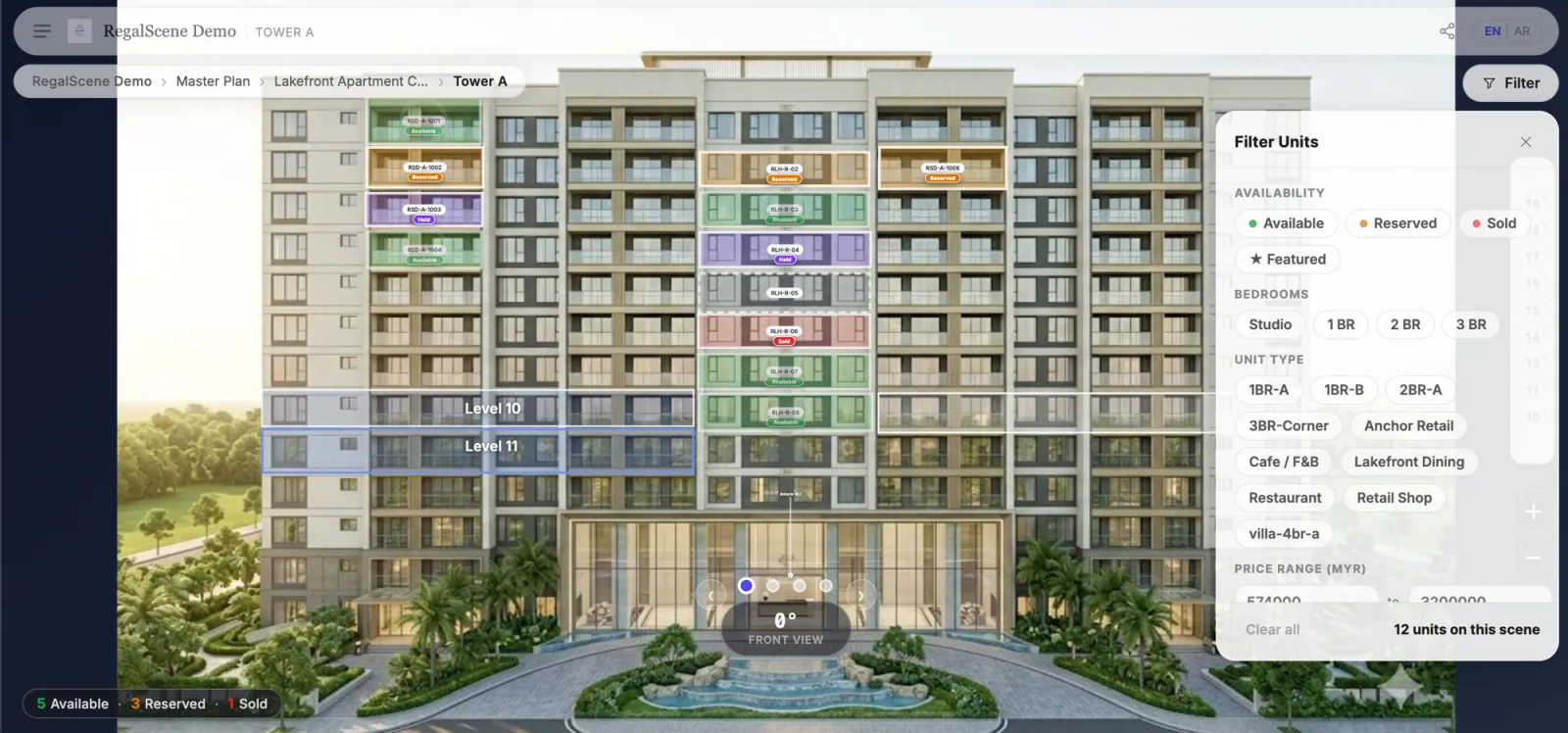
Buyer intelligence starts with the journey itself: master plan to building to floor to unit, and out to an enquiry. Each step answers a different question and reveals a different signal. A buyer who jumps straight to a specific tower is telling you something the buyer who lingers on the amenity map is not. The full buying journey, from discovery to unit selection, is the sequence every other signal is read against, and the four view styles that make up that journey are where the exploration actually happens.
You cannot measure a journey you have not built. The interactive experience is the instrument.
 Live demoSee the experience that captures buyer intentopens the interactive RegalScene demo in a new tab
Instrumenting the journey
Once the experience exists, the question is what to record and what to ignore. The useful signals are the concrete ones: views opened, units viewed, filters applied, comparisons made, time on each level, and the path between them. The discipline is connecting all of it back to one place, so a buyer's actions on an agency's embedded page and on your own campaign are the same person in the same system. Centralizing buyer intent across every channel is what turns scattered clicks into a picture you can act on. Once it sits in one place, the reporting layer that reads demand by tower, floor, and unit is what makes it legible to a marketing director on a Monday morning.
Track the actions that map to a decision. Ignore the vanity metrics that do not.
Leads that arrive with context
The most immediate payoff is at the point of enquiry. A lead that carries what the buyer explored turns a cold introduction into a warm follow-up: the salesperson already knows the units, the typology, and the price band before they dial. This is the difference between a name on a form and a qualified buyer, and it is the fastest way buyer intelligence pays for itself. The mechanism is enquiry capture that carries the journey with it, attaching the exploration path at the moment the buyer acts rather than asking them to describe it later.
A lead with context lets the first sales call start halfway to the close.
Reading demand before you commit
Aggregate the journeys and a bigger payoff appears. Which typologies draw the most attention, which price bands get filtered to, which buildings buyers cluster on. This is demand data, gathered before a foundation is poured. Developers use it to validate demand for a development before building it, to size a release, to set the unit mix, and to price with evidence instead of a guess.
The most expensive guess in property is what the market wants. Buyer intelligence turns the guess into a measurement.
Finding where buyers stop
A journey that ends without an enquiry is not a failure to record; it is one of the most useful things you can see. High interest with no enquiry is a signal, usually about price or availability, not a marketing miss. Reading where buyers actually drop off between interest and enquiry is how a developer fixes the real leak instead of spending more at the top of the funnel.
Where buyers stop tells you more than where they start.
Why this is a moat, not a feature
Buyer intelligence is hard to copy because it requires the whole chain: an interactive experience buyers actually use, one system capturing every channel, and a lead engine that connects behavior to the enquiry. Render galleries and static maps cannot produce it, because there is no funnel underneath the picture. This is also why the same data travels well through partners: an agency working from your embedded experience gets the buyer's context before the first call, and the intelligence still flows back to you.
Anyone can show a buyer a project. Knowing what the buyer did with it is the advantage.
The RegalScene Approach
RegalScene is built as one system so buyer intelligence is a byproduct of the experience, not a separate analytics project. The interactive experience, the inventory, the lead capture, and the reporting are the same platform, so every buyer's journey, wherever it happens, feeds one picture you own.
The developers who will price, mix, and sell better over the next few years are not the ones with the most leads. They are the ones who understand what their buyers were reaching for before anyone picked up the phone.
Related reading:
- From Lead to Unit Selection: Improving the Online Property Buying Journey
- Centralizing Buyer Intent Across Websites, Campaigns, and Sales Channels
- Why Buyer Context Matters More Than Basic Contact Forms
- How to Validate Demand for a Property Development Before You Build It
- How Interactive Property Experiences Increase Sales Conversion
RegalScene turns how buyers explore a project into intelligence you can price, mix, and sell against. See the platform or book a demo.