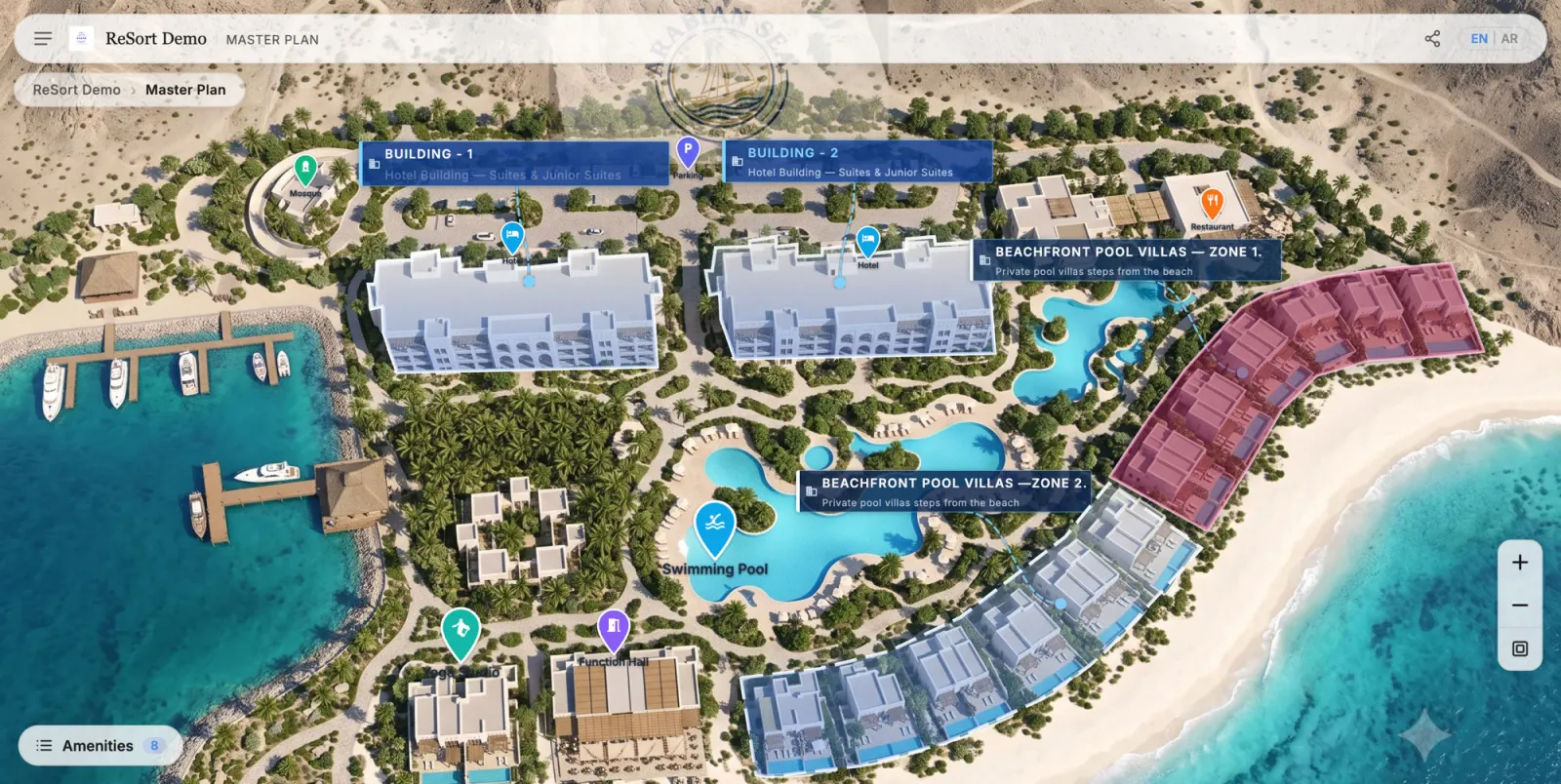
Hotels and resorts spend more on visualization than almost any other property type. Aerial renders of the coastline, CGI of the infinity pool, cutaways of the spa and the beach club. Then most of that work is published the way a brochure is: as a wall of flat images a guest scrolls past. An interactive hotel and resort master plan is what those same assets become when the visitor gets to explore them instead of just looking at them.
What is an interactive hotel and resort master plan?
An interactive hotel and resort master plan is a navigable version of a hospitality project's site plan. Instead of a fixed image, the visitor opens the resort as a map: the full property, the amenities pinned as points of interest, the villa clusters and hotel wings drawn as zones, each opening to more detail on tap. Where a project sells residences or villas, the plan carries live availability and an enquiry action at the unit level.
The point is simple. A guest or a buyer stops reading the resort on the developer's terms and starts moving through it on their own.
How does it work?
The resort render becomes a deep-zoom scene: a single high-resolution image the visitor can pan and zoom without it turning to mush. Over that view sit interactive layers.
- Amenity points of interest mark the pool, the beach club, the spa, the marina, the restaurants, and the kids' club. Each opens a photo, a description, or a 360 view.
- Zones and clusters outline villa precincts, hotel towers, and phases. A tap moves the visitor into that part of the resort.
- Villa or residence selection connects each unit to its current status, its layout, and whether its price is shown, if the project sells branded residences.
- A 360 or interior view drops the visitor inside a villa or a suite from the same experience.
None of this is a new production pipeline. It is the render, the amenity CGI, and the inventory the project already has, assembled into one navigable layer.
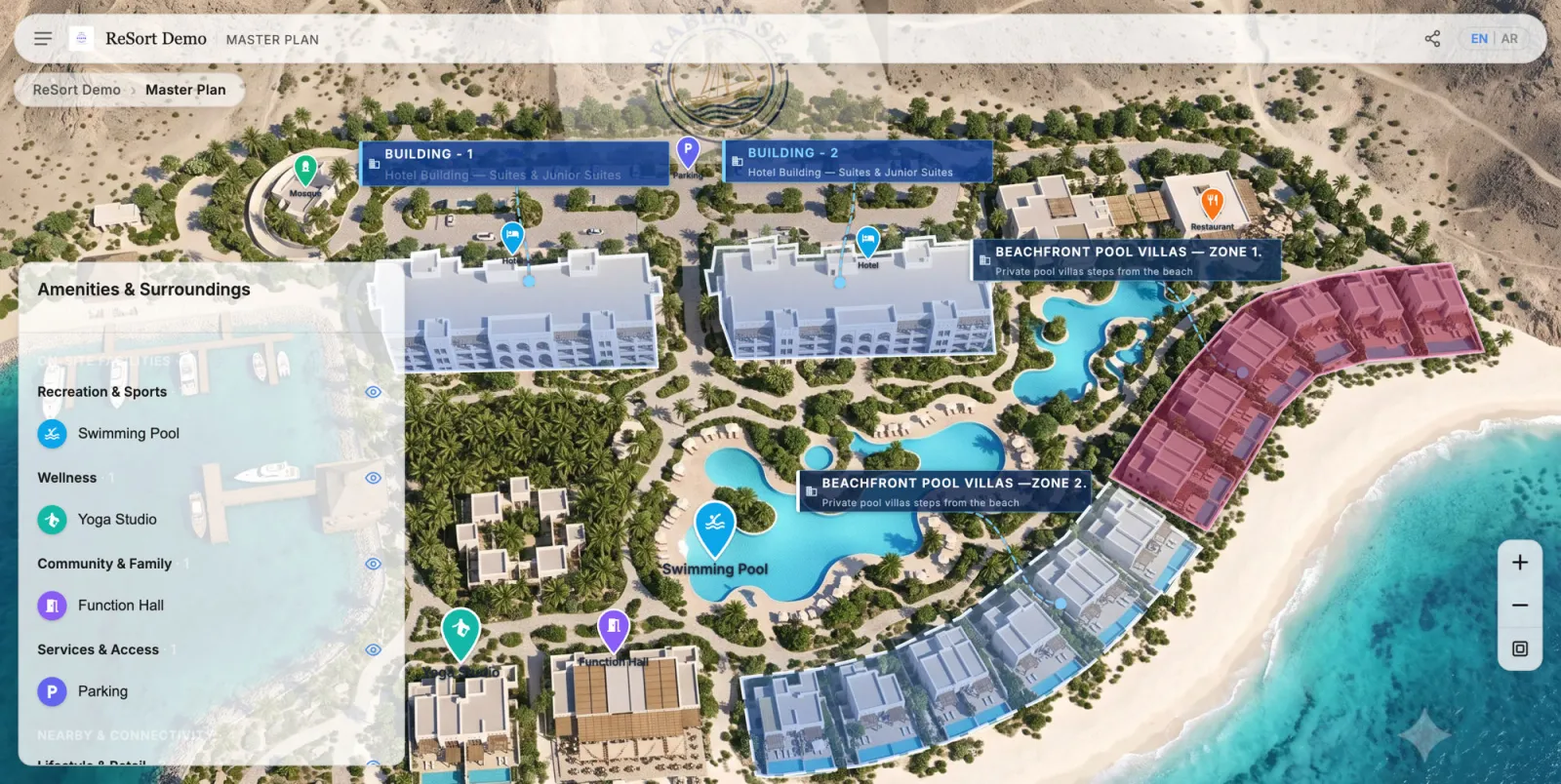 Live demoExplore a resort master plan liveopens the interactive RegalScene demo in a new tab
What guests and buyers can do with it
The experience answers the questions a render cannot. Where is the villa in relation to the beach and the spa. What is the walk to the marina. Which residences on the quiet side are still available. How does the two-bedroom pool villa lay out inside.
A resort is a place people imagine themselves into, and exploration is how they do it. Reading distances, comparing villa positions, and opening amenities in sequence builds the familiarity that a hero image never can, all before anyone books a site visit or a stay.
Who uses interactive resort master plans?
- Resorts and hotels presenting the property and its amenities to guests and travel partners.
- Branded residences and hotel-managed residences selling villas and apartments off-plan, where the brand and the amenity story carry the price.
- Mixed-use hospitality developments combining a hotel, residences, retail, and leisure under one master plan.
- Tourism and destination projects where the draw is the place itself, not a single building.
What assets do you need?
The same ones the project commissions anyway: a high-resolution resort master plan render, the amenity and villa CGI, and any interior imagery. Optionally, a boundary file for zones and precincts, and an inventory list for residences or villas that are for sale. There are no 3D models to build, no game engine, and no headset. The marketing package becomes the interactive foundation.
How is it different from a hotel virtual tour?
A virtual tour is a fixed walk through rendered rooms: valuable inside a specific villa or suite, but linear. It shows one path. An interactive master plan is the layer above it. It holds the whole resort, lets the visitor choose where to go, and links out to the 360 tour at the point where the visitor asks to step inside. The two work together: the master plan for orientation and choice, the tour for immersion in a single space. We compare the two formats directly in resort map versus 360 tour.
Where it fits
An interactive hotel and resort master plan is the hospitality version of the same idea behind any interactive master plan: turn the assets you already own into a navigable sales and marketing surface. In hospitality it earns its place faster, because the render budget is already large and the amenity story is the product. The natural next step is the how, covered in turning resort renders into an interactive experience, and, where residences are for sale, how branded residences are sold off-plan.
Related reading:
- 3D Rendering for Hotel and Resort Marketing
- How Branded Residences Are Sold Off-Plan
- Virtual Tours for Tourism Destinations: Resorts, Hotels & Attractions
- Resort Launch Budgets: Show Villa vs Digital
RegalScene turns the renders a hotel or resort already owns into one interactive, explorable experience with live availability and lead capture. See how it works or contact us to map your resort.